eBike Long Range: What Battery Specs Really Mean

Affiliate disclosure: Some links on this page are affiliate links. If you buy through them we earn a small commission at no extra cost to you. Recommendations are research-driven; we don't claim personal use of every product reviewed. Product prices and availability are accurate as of the date published and are subject to change. Always check Amazon for current pricing before purchasing. Learn more.
Quick Picks
Heybike Ranger 2.0 Foldable Electric Bike for Adults, 20"*4 Fat Tire Ebike with 1400W Peak Motor, 28 MPH Max Speed, 600Wh Removable Battery, Up to 65 Miles Range, Front Suspension Step-Thru E Bike
Foldable design enables convenient storage and portability
Buy on AmazonVivi Folding Electric Bike for Adults, 20" x 2.4 Fat Tire Ebike, Peak 750W Foldable Electric Bicycle, 20MPH Commuter E-Bike with 48V Removable Battery, 7 Speed, SGS Certified to UL2849
750W motor enables commuting speeds up to 20MPH
Buy on AmazonINSDRGN 14" Folding Electric Bike for Adults, Peak 1500W Motor,20MPH Max Speed,48V 16Ah Removable Battery Electric Bike, 35/62Miles Max Range, UL 2849 Certified E Bike
Powerful 1500W peak motor enables quick acceleration and hill climbing
Buy on Amazon| Product | Price Range | Top Strength | Key Weakness | Buy |
|---|---|---|---|---|
| Heybike Ranger 2.0 Foldable Electric Bike for Adults, 20"*4 Fat Tire Ebike with 1400W Peak Motor, 28 MPH Max Speed, 600Wh Removable Battery, Up to 65 Miles Range, Front Suspension Step-Thru E Bike also consider | $$ | Foldable design enables convenient storage and portability | Foldable frame may sacrifice some structural rigidity versus rigid models | Buy on Amazon |
| Vivi Folding Electric Bike for Adults, 20" x 2.4 Fat Tire Ebike, Peak 750W Foldable Electric Bicycle, 20MPH Commuter E-Bike with 48V Removable Battery, 7 Speed, SGS Certified to UL2849 also consider | $$ | 750W motor enables commuting speeds up to 20MPH | Folding frame may reduce structural rigidity versus full-size bikes | Buy on Amazon |
| INSDRGN 14" Folding Electric Bike for Adults, Peak 1500W Motor,20MPH Max Speed,48V 16Ah Removable Battery Electric Bike, 35/62Miles Max Range, UL 2849 Certified E Bike also consider | $$ | Powerful 1500W peak motor enables quick acceleration and hill climbing | Folding frame design may compromise rigidity compared to non-folding models | Buy on Amazon |
Ebike long range claims are everywhere right now, and most of them deserve serious skepticism. Manufacturers test on flat pavement at minimal assist levels, in controlled conditions that bear little resemblance to how most riders actually use these bikes. Real-world range depends on rider weight, terrain, temperature, and assist mode in ways that can cut spec numbers by half or more.
This piece focuses on folding ebikes built around long-range battery configurations, covering what the specs actually mean and where they fall short. The Specs & Performance breakdown below should help you calibrate expectations before you buy.
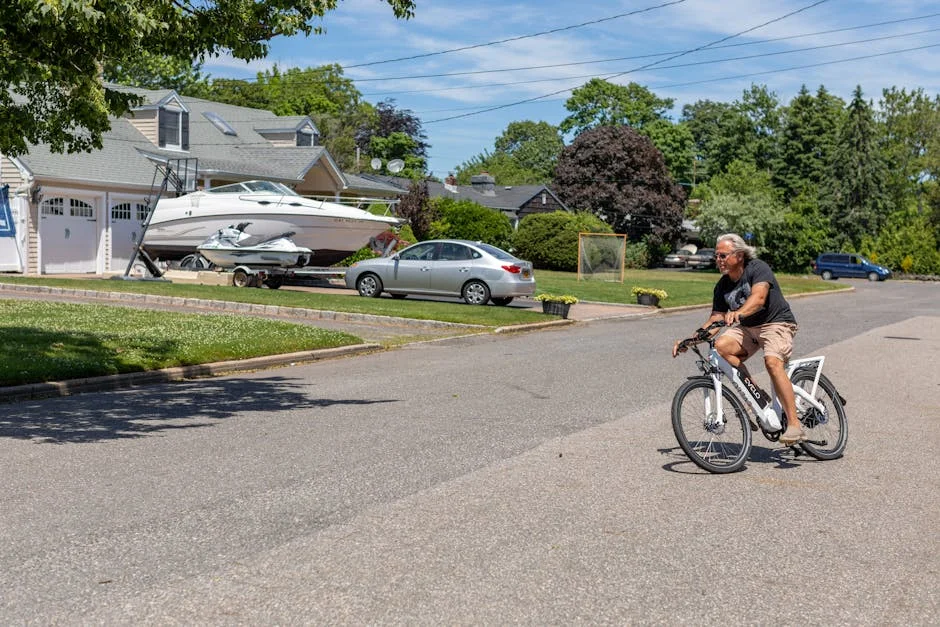
What “Long Range” Actually Means on a Folding Ebike
Folding ebikes occupy a specific niche. They trade some structural stiffness and wheel size for portability, which matters a great deal for apartment dwellers, commuters working from transit hubs, or anyone storing a bike in a trunk rather than a garage. The ebike long range conversation within this category is complicated by the fact that most folding bikes use smaller wheels, which affects rolling efficiency, and fat tires, which add grip but also rolling resistance.
A 600Wh battery on a folding fat-tire bike is not the same as 600Wh on a lightweight road-geometry commuter. Motor efficiency, tire width, frame weight, and rider position all affect how far that stored energy actually takes you. When brands advertise 60-plus miles of range, that number almost always comes from eco mode on flat pavement at low speeds. For mixed terrain, hills, or higher assist levels, plan on significantly less.
For a deeper look at how battery capacity, motor efficiency, and real-world conditions interact, the Specs & Performance hub covers those variables in detail.
Buying Guide: Folding Ebikes for Long-Range Use
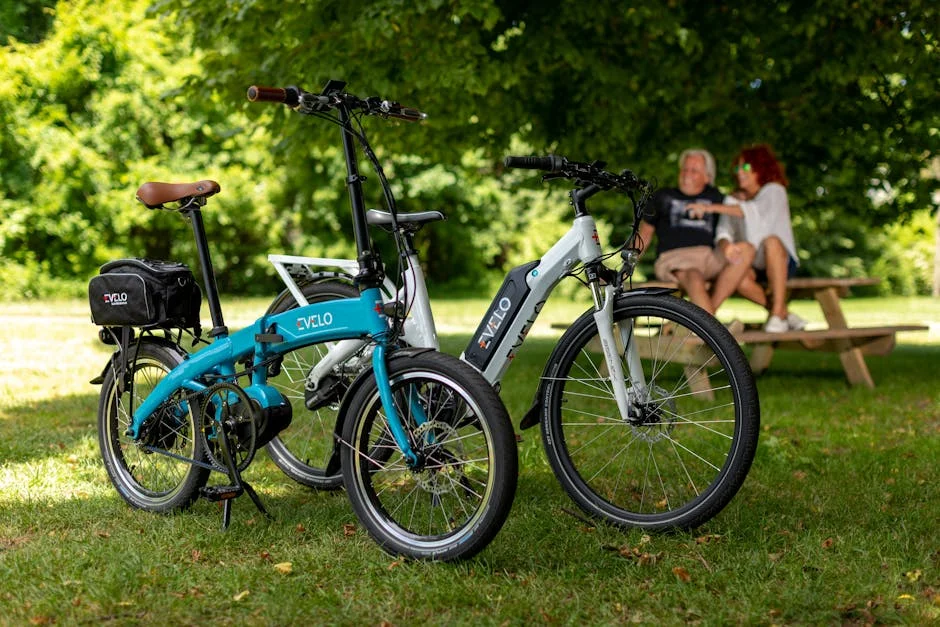
Battery Capacity and Real-World Range Expectations
The watt-hour rating on a battery pack is the most honest single number you can use for comparison, but it only tells part of the story. A 48V 16Ah pack gives you 768Wh of stored energy, while a 48V 12.5Ah pack gives you 600Wh. Higher watt-hours generally mean more range, but motor efficiency, assist mode, and terrain all apply a multiplier to that number.
Verified buyer reports across multiple folding ebike categories consistently show that eco mode on flat ground gets close to advertised range, while higher assist modes in hilly terrain can cut range by 50 percent or more. Cold weather, typically below 40 degrees Fahrenheit, further reduces battery output. Build your range expectations around 60 percent of the advertised figure as a reasonable real-world baseline.
Motor Peak Wattage vs. Continuous Output
Peak wattage figures are marketing numbers. A motor advertised at 1500W peak may only sustain 500 to 750W continuously, and that sustained figure is what determines performance on extended climbs. The Specs & Performance section covers motor ratings in more detail, but the short version is this: continuous wattage, not peak, determines whether the motor will maintain assist on a long grade without thermal throttling.
Cadence sensors, which are common on mid-range folding ebikes, detect pedaling motion and apply assist without measuring actual force. Torque sensors respond to how hard you’re pedaling, which feels more natural and typically improves efficiency. Most folding bikes in the mid-range price band use cadence sensors, which deliver a more on/off power feel.
Wheel Size and Tire Width Trade-offs
Folding bikes commonly use 14-inch, 16-inch, or 20-inch wheels. Smaller wheels accelerate faster but provide less stability at speed and roll over obstacles with more effort. Twenty-inch wheels are widely considered the practical floor for mixed-terrain use on a folding design. Fat tires in the 4-inch range improve traction on loose or wet surfaces but add rolling resistance that eats into range at higher speeds.
For riders prioritizing genuine long range over all-terrain capability, narrower tires on 20-inch rims will extend battery life compared to fat-tire configurations at equivalent assist levels.
Folding Frame Durability Considerations
Folding frames introduce hinge points that rigid frames do not have, and hinge quality varies significantly across price points. Field reports from folding ebike communities note that cheaper hinge mechanisms develop play over time, which affects handling precision and can create noise. Heavier riders, particularly those above 200 pounds, should check published weight limits carefully and prioritize frames with reinforced hinge designs.
UL 2849 certification covers electrical system safety rather than frame structural integrity. A UL-certified bike may still have a hinge that loosens after extended use, so frame construction quality requires separate evaluation.
Storage, Transport, and Portability Realities
The folding feature is only useful if the folded dimensions and weight are manageable for your specific use case. Many folding ebikes fold compactly but still weigh 50 to 65 pounds, which is difficult to carry up stairs or lift into overhead storage without assistance. Measure your car trunk, storage space, or transit luggage area before committing to a specific folded footprint.
Removable batteries add flexibility for charging without moving the whole bike, which matters for apartment storage or office charging. Most mid-range folding ebikes now include removable battery designs, which is worth confirming before purchase.
Top Picks
Heybike Ranger 2.0 Foldable Electric Bike
The Heybike Ranger 2.0 Foldable Electric Bike for Adults sits in the mid-range price band and targets riders who want a fat-tire folding bike capable of handling mixed terrain. The 600Wh removable battery and a manufacturer-claimed range of up to 65 miles are the headline specs here. Apply the 60-percent real-world adjustment, and you’re looking at roughly 35 to 40 miles under realistic conditions with moderate assist use.
The 1400W peak motor drives a 28 MPH top speed, which is meaningful for commuters covering longer distances where average speed matters. Spec data shows the motor uses a cadence-sensing system, which explains the on/off assist feel that buyer reports mention. The 20-inch by 4-inch fat tires provide solid grip on gravel and hardpack, but verified buyer reports note increased effort at higher speeds compared to narrower-tire configurations, consistent with the rolling resistance trade-off that comes with fat rubber.
Front suspension adds some comfort on rough pavement or light trail use. The step-thru frame configuration helps riders with limited flexibility or those mounting the bike frequently throughout a commute. The foldable design is the core value proposition here, though forum discussions note that the hinge mechanism requires periodic tightening under regular use. For a mid-range folding fat-tire bike prioritizing range, the Ranger 2.0 covers the basics without asking for premium pricing.
Check current price on Amazon.
Vivi Folding Electric Bike for Adults
The Vivi Folding Electric Bike for Adults uses a 750W peak motor and 20-inch by 2.4-inch fat tires, landing in a narrower tire width category than many competitors in this segment. The narrower 2.4-inch tire does reduce rolling resistance compared to a full 4-inch fat tire, which should help the battery stretch further per charge at equivalent assist levels. That trade-off costs some all-terrain grip, but for mixed pavement and light gravel use, it’s a reasonable balance.
The 48V removable battery supports off-bike charging, and the 7-speed drivetrain gives riders more control over cadence and effort on varied terrain. Buyer reports note that the 20 MPH top speed feels appropriate for the bike’s weight class and intended use. The SGS and UL 2849 certifications address electrical system safety, which matters when evaluating mid-range battery packs from brands with limited service infrastructure.
Structural feedback in verified buyer reviews describes the frame as adequate for regular commuting loads, with notes that heavier riders near the weight limit should monitor hinge condition more frequently. For commuters looking for a compact folding bike with a battery they can carry upstairs and charge at a desk, this configuration covers that use case at a mid-range price.
Check current price on Amazon.
INSDRGN 14” Folding Electric Bike
The INSDRGN 14” Folding Electric Bike for Adults is the most compact option in this group, built around 14-inch wheels and a 48V 16Ah battery that represents the largest battery capacity in this lineup at 768Wh. The 1500W peak motor provides quick acceleration and hill-climbing assist, and the UL 2849 certification covers electrical safety. Claimed range runs from 35 to 62 miles depending on assist mode, and spec data confirms that wider range reflects significant variability between eco and full-power modes.
The 14-inch wheel size is the defining trade-off here. Smaller wheels roll over surface irregularities with less damping, and stability at speed is measurably lower than 20-inch wheel configurations. Field reports from compact folding bike communities note that 14-inch designs work well for last-mile transport and very short commutes but become tiring over longer distances due to the increased attention required on rough surfaces. The folded footprint is genuinely small, which is the point for riders with extremely limited storage space.
Battery capacity at 768Wh is a legitimate advantage for range if the use case fits the wheel size limitations. For riders who need maximum storage compactness and operate primarily on smooth pavement with moderate distances, the INSDRGN’s battery size provides a meaningful range cushion over smaller-pack competitors.
Check current price on Amazon.
Frequently Asked Questions
How far can a folding ebike realistically travel on a single charge?
Manufacturer range claims are measured under ideal conditions: flat pavement, low assist, optimal temperature, and lighter rider weight. Real-world range for most riders on mixed terrain or with regular hill climbing runs 50 to 60 percent of the advertised figure. A bike claiming 60 miles will typically deliver 30 to 40 miles under everyday use conditions. Cold weather below 40 degrees Fahrenheit reduces battery output further, sometimes by 15 to 20 percent.
Does a higher peak watt motor mean better range?
Peak wattage and range efficiency are not directly related. A higher peak watt motor can accelerate faster and climb hills more easily, but sustained output and assist mode settings determine energy consumption. A powerful motor running in eco mode may actually use less energy than a lower-rated motor working hard at maximum assist. Motor efficiency ratings and the assist system design matter more than the peak wattage number for range optimization.
Are fat tires worth it on a long-range folding ebike?
Fat tires improve traction on loose, wet, or unpaved surfaces, but they increase rolling resistance compared to narrower tires. For riders primarily using an ebike on pavement or packed gravel, narrower tires will extend range at equivalent assist levels. Fat tires make sense if the route includes genuinely rough terrain where grip is a limiting factor. For pure commuting range, a 2.4-inch tire will outperform a 4-inch fat tire on battery efficiency.
What does UL 2849 certification mean for an ebike?
UL 2849 is a safety standard covering the electrical system of an ebike, including the battery, motor, charger, and wiring integration. Certification means the electrical components have been tested to reduce fire and shock risk under defined conditions. It does not address frame strength, hinge durability, or mechanical component quality. Buyers should treat UL 2849 as a baseline for electrical safety rather than an overall quality endorsement.
Is a 14-inch wheel folding ebike suitable for longer commutes?
Fourteen-inch wheels fold to a very compact footprint but reduce stability at speed and increase rider fatigue on rough or uneven surfaces compared to 20-inch designs. For commutes under 5 to 8 miles on smooth pavement, the 14-inch format works adequately. For longer distances or routes with variable surface quality, the 20-inch wheel format is widely recommended by buyers who have used both sizes. Battery capacity matters independently of wheel size for actual range.

<script type="application/ld+json">
{
"@context": "https://schema.org",
"@type": "FAQPage",
"mainEntity": [
{
"@type": "Question",
"name": "How far can a folding ebike realistically travel on a single charge?",
"acceptedAnswer": {
"@type": "Answer",
"text": "Manufacturer range claims are measured under ideal conditions: flat pavement, low assist, optimal temperature, and lighter rider weight. Real-world range for most riders on mixed terrain or with regular hill climbing runs 50 to 60 percent of the advertised figure. A bike claiming 60 miles will typically deliver 30 to 40 miles under everyday use conditions. Cold weather below 40 degrees Fahrenheit reduces battery output further, sometimes by 15 to 20 percent."
}
},
{
"@type": "Question",
"name": "Does a higher peak watt motor mean better range?",
"acceptedAnswer": {
"@type": "Answer",
"text": "Peak wattage and range efficiency are not directly related. A higher peak watt motor can accelerate faster and climb hills more easily, but sustained output and assist mode settings determine energy consumption. A powerful motor running in eco mode may actually use less energy than a lower-rated motor working hard at maximum assist. Motor efficiency ratings and the assist system design matter more than the peak wattage number for range optimization."
}
},
{
"@type": "Question",
"name": "Are fat tires worth it on a long-range folding ebike?",
"acceptedAnswer": {
"@type": "Answer",
"text": "Fat tires improve traction on loose, wet, or unpaved surfaces, but they increase rolling resistance compared to narrower tires. For riders primarily using an ebike on pavement or packed gravel, narrower tires will extend range at equivalent assist levels. Fat tires make sense if the route includes genuinely rough terrain where grip is a limiting factor. For pure commuting range, a 2.4-inch tire will outperform a 4-inch fat tire on battery efficiency."
}
},
{
"@type": "Question",
"name": "What does UL 2849 certification mean for an ebike?",
"acceptedAnswer": {
"@type": "Answer",
"text": "UL 2849 is a safety standard covering the electrical system of an ebike, including the battery, motor, charger, and wiring integration. Certification means the electrical components have been tested to reduce fire and shock risk under defined conditions. It does not address frame strength, hinge durability, or mechanical component quality. Buyers should treat UL 2849 as a baseline for electrical safety rather than an overall quality endorsement."
}
},
{
"@type": "Question",
"name": "Is a 14-inch wheel folding ebike suitable for longer commutes?",
"acceptedAnswer": {
"@type": "Answer",
"text": "Fourteen-inch wheels fold to a very compact footprint but reduce stability at speed and increase rider fatigue on rough or uneven surfaces compared to 20-inch designs. For commutes under 5 to 8 miles on smooth pavement, the 14-inch format works adequately. For longer distances or routes with variable surface quality, the 20-inch wheel format is widely recommended by buyers who have used both sizes. Battery capacity matters independently of wheel size for actual range."
}
}
]
}
</script>Where to Buy
Heybike Ranger 2.0 Foldable Electric Bike for Adults, 20"*4 Fat Tire Ebike with 1400W Peak Motor, 28 MPH Max Speed, 600Wh Removable Battery, Up to 65 Miles Range, Front Suspension Step-Thru E BikeSee Heybike Ranger 2.0 Foldable Electric … on Amazon