E-Bike Repair Shop Guide: When to DIY vs. Visit a Pro

Affiliate disclosure: Some links on this page are affiliate links. If you buy through them we earn a small commission at no extra cost to you. Recommendations are research-driven; we don't claim personal use of every product reviewed. Product prices and availability are accurate as of the date published and are subject to change. Always check Amazon for current pricing before purchasing. Learn more.
Quick Picks
CXWXC Bike Repair Stand -Shop Home Bicycle Mechanic Maintenance Rack- Bike Workstands for Mountain Bike and Road Bike (rs100) (Black)
Versatile design accommodates both mountain and road bikes
Buy on AmazonCHEPARK Bike Repair Stand (Max 88lbs) - Bench/ Wall Mount Bike Workstand - E Bike Repair Stand Shop Home Mechanics for Mountain Bike and Road Bike (Bench/ Wall)
Dual bench and wall mount options provide flexible workspace setup
Buy on AmazonDURATECH 41 Pieces Bike Repair Tools, Complete Bike Tools Kit with Storage Box, Mountain Bike Maintenance Tools, for Mountain, Road, and Park Bicycle with Chain Riveter, Tire Levers, Crank Puller
41-piece kit provides comprehensive tools for complete bike maintenance
Buy on Amazon| Product | Price Range | Top Strength | Key Weakness | Buy |
|---|---|---|---|---|
| CXWXC Bike Repair Stand -Shop Home Bicycle Mechanic Maintenance Rack- Bike Workstands for Mountain Bike and Road Bike (rs100) (Black) also consider | $$ | Versatile design accommodates both mountain and road bikes | Budget brand may lack premium build quality assurance | Buy on Amazon |
| CHEPARK Bike Repair Stand (Max 88lbs) - Bench/ Wall Mount Bike Workstand - E Bike Repair Stand Shop Home Mechanics for Mountain Bike and Road Bike (Bench/ Wall) also consider | $$ | Dual bench and wall mount options provide flexible workspace setup | Fixed 88lbs weight limit may not suit heavier e-bikes | Buy on Amazon |
| DURATECH 41 Pieces Bike Repair Tools, Complete Bike Tools Kit with Storage Box, Mountain Bike Maintenance Tools, for Mountain, Road, and Park Bicycle with Chain Riveter, Tire Levers, Crank Puller also consider | $$ | 41-piece kit provides comprehensive tools for complete bike maintenance | Multi-tool kits may include some rarely-used specialized items | Buy on Amazon |
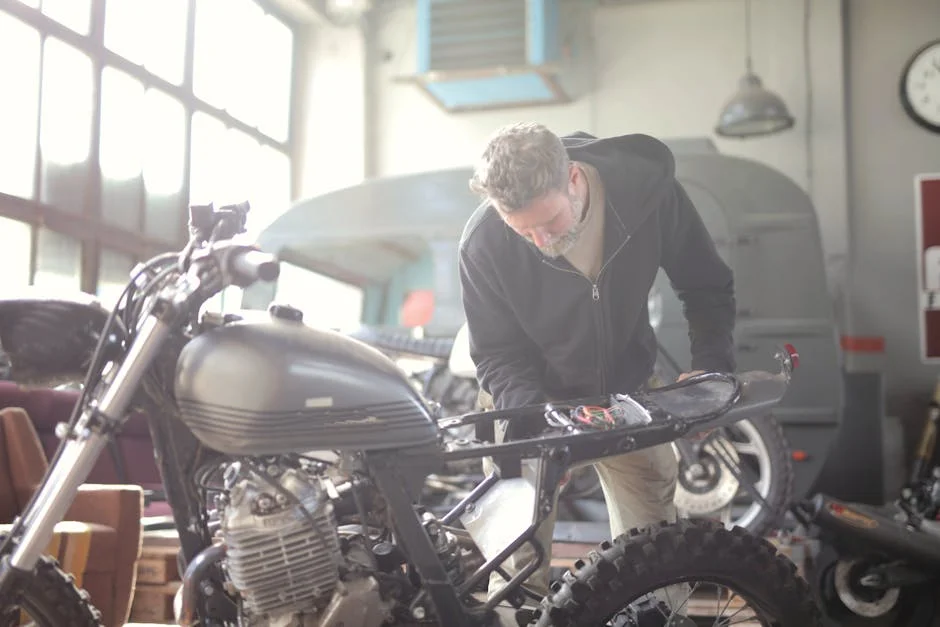
Finding a reliable e-bike repair shop near you is not always straightforward, especially if you’re outside a major metro or riding a less common motor platform. That reality pushes a lot of riders toward building out a home workshop capable of handling routine maintenance and minor repairs between shop visits.
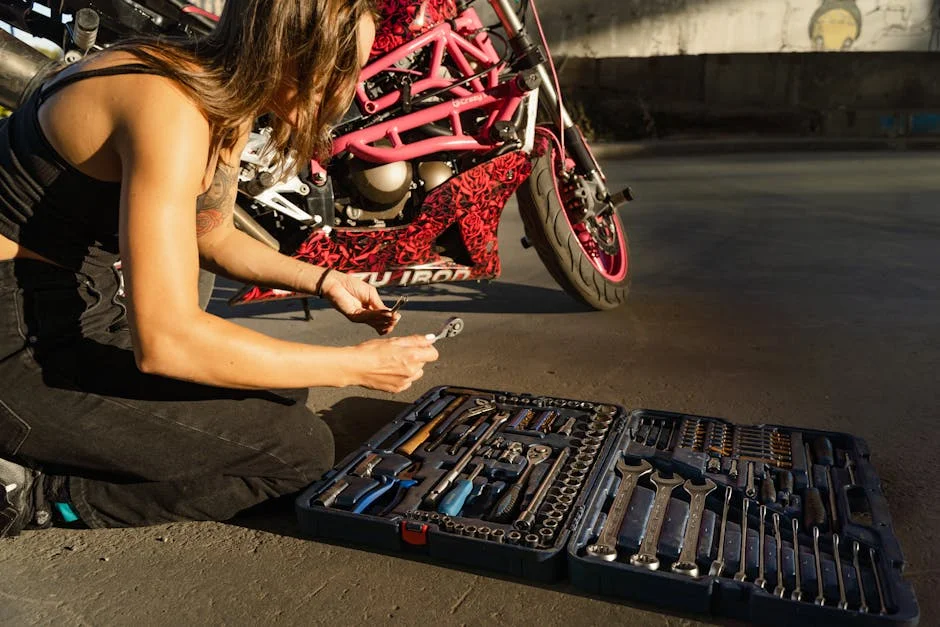
Having the right equipment at home changes what you can realistically tackle yourself. A stable work stand, a complete tool kit, and some baseline mechanical knowledge cover the majority of maintenance tasks that would otherwise mean a trip to a dealer or an e-bike tune up cost that adds up fast over a season.
Why a Home Workshop Matters for E-Bike Owners
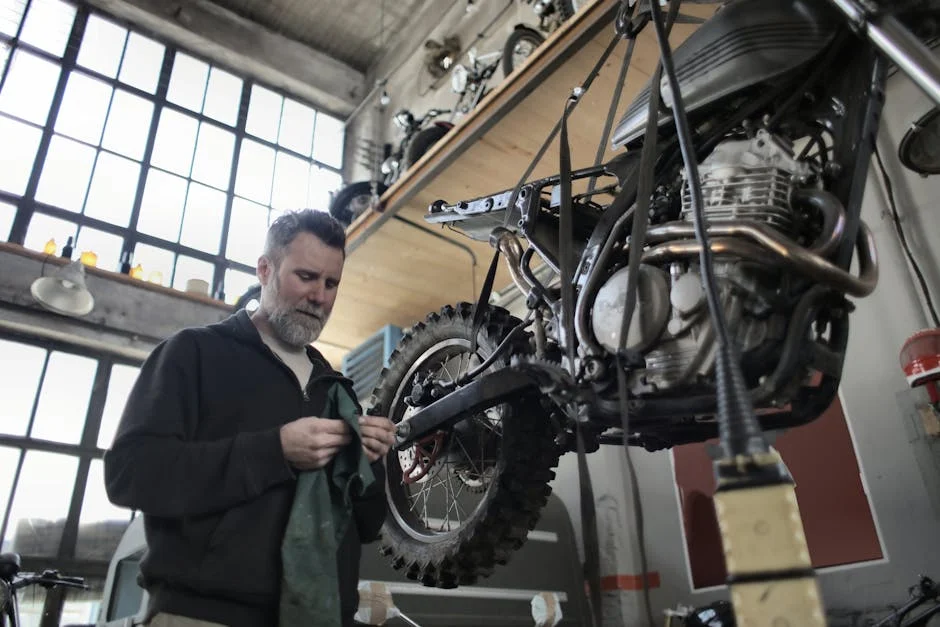
E-bike ownership introduces a layer of complexity that a standard bicycle doesn’t carry. Motor systems like the Bosch CX, Shimano EP8, and Specialized SL1.2 each have their own firmware update cycles, proprietary connectors, and torque sensor calibration requirements. Some of that work genuinely requires a certified technician and dealer-level diagnostic software. But a significant portion of what sends riders to the shop, cable tension, brake bleed prep, drivetrain cleaning, tire swap, headset adjustment, is well within reach of a home mechanic with decent equipment.
The weight factor matters here more than most riders expect. A mid-drive e-MTB running a full-size Bosch CX or Shimano EP8 motor typically lands between 45 and 55 pounds. A few cargo-style e-bikes push past 70. That’s a different animal from a 25-pound hardtail, and it affects what work stand you can realistically clamp, how you position the bike, and whether your stand can hold the bike securely during torque-heavy tasks like pedal removal or bottom bracket work.
The broader world of e-bike Maintenance & Repair covers everything from motor diagnostics to consumable replacement. The home workshop section of that equation starts with two foundational pieces: a stable stand and a complete tool kit.
What to Look for in an E-Bike Work Stand
Weight Capacity First, Then Clamp Design
Most standard bike repair stands are rated for 33 to 44 pounds. That spec was written for analog road bikes and trail hardtails. A full-suspension e-MTB blows past those numbers before you add water bottles or a dropper post. When sourcing a stand for e-bike use, the functional minimum is around 66 pounds of rated capacity, and 88 pounds gives meaningful headroom for heavier cargo or hybrid builds.
Clamp design matters almost as much as raw weight rating. E-bike frames increasingly feature oversized tubes, integrated battery housings, and unconventional top tube geometry that makes clamping without damage more difficult. Look for padded jaw surfaces, adjustable clamp angles, and a throat depth that can reach past battery edges without forcing contact with the housing itself.
Stand Type: Floor, Bench, or Wall Mount
Floor stands are the most flexible option for a garage or barn workshop. They don’t require dedicated wall or bench space, they can rotate to give you access from any angle, and they store flat when not in use. The trade-off is footprint and lateral stability under heavy bikes.
Bench and wall mounts sacrifice portability for rigidity. If you have a dedicated workshop bench, a bench-mount stand keeps the bike at a fixed working height and doesn’t shift under lateral pressure the way a floor stand can on a smooth concrete surface. Wall mounts work well in tight spaces but require advance planning around stud location and mounting height.
Tool Kit Completeness for E-Bike Maintenance
E-bike drivetrain work shares most tools with analog bike maintenance. A comprehensive kit needs chain tools, cassette lockring sockets, cone wrenches, spoke wrenches, torx keys in the T25 and T30 sizes common on motor mounts and rotor bolts, hex keys from 2mm through 8mm, and tire levers rated for tight-fitting tubeless setups.
Where e-bike maintenance diverges is in torque sensitivity. Motor mount bolts, battery retention hardware, and sensor connectors often have tight torque specs measured in newton-meters. A torque wrench or torque-limited driver is worth adding to any kit that will see regular e-bike use.
Good organizational discipline also matters. Mixing dedicated e-bike hardware into a general tool box creates the kind of chaos that leads to cross-threaded motor mount bolts. A kit that ships with a structured storage case keeps things sorted and portable for trailside fixes when needed.
Top Picks
CXWXC Bike Repair Stand (rs100)
The CXWXC Bike Repair Stand is a floor-standing mechanic’s work stand built around a design that accommodates both mountain and road bike geometry. Verified buyers note that the stand handles a reasonable range of frame sizes and tube diameters, and the clamp mechanism receives consistent feedback for holding position without slipping under routine maintenance tasks.
For home workshop use, the stand occupies a mid-range position in terms of construction. It is not a Park Tool PCS-10 competitor in terms of hardware grade, but buyer reports suggest it performs adequately for the tasks most home mechanics actually perform: drivetrain work, cable adjustments, wheel swaps, and brake bleeds. The clamp height adjusts through a typical range and the base spread provides lateral stability on flat surfaces.
The CXWXC’s main limitation for e-bike use is the same one that affects most stands in this price band: published weight capacity data is not always clearly specified, which makes it harder to confirm suitability for heavier full-suspension e-MTBs in the 50-plus-pound range. Field reports from buyers using it with standard trail bikes are generally positive. Use with heavier e-bikes should be approached with awareness of that uncertainty.
Check current price on Amazon.
CHEPARK Bike Repair Stand (Max 88lbs)
The CHEPARK Bike Repair Stand addresses the weight capacity question directly with a published 88-pound rating, which is one of the more useful specs on any stand targeting e-bike owners. That number covers the vast majority of e-MTBs, e-road bikes, and mid-range cargo builds without requiring guesswork.
The dual-configuration design is the other notable aspect here. The stand ships with mounting hardware and hardware options for both bench-mount and wall-mount installation, which gives a home mechanic flexibility at the point of setup rather than committing to one layout before understanding how the space actually works. Verified buyers note that the install process is straightforward for either configuration and that the clamp holds larger-diameter tubes without requiring excessive force.
The 88-pound limit is a ceiling, not a suggestion. Heavier cargo e-bikes and some long-travel full-suspension builds with battery systems and accessories installed can push toward that number. Riders running bikes in that weight class should verify the loaded weight before committing. For everything below that threshold, verified buyer consensus indicates the CHEPARK performs as a reliable bench or wall solution for regular shop-style work at home.
Check current price on Amazon.
DURATECH 41 Pieces Bike Repair Tools Kit
The DURATECH 41 Pieces Bike Repair Tools Kit covers the full range of routine bike maintenance tasks in a single purchase. The 41-piece configuration includes a chain riveter, tire levers, a crank puller, hex keys, spoke wrenches, and a selection of additional tools that address the most common maintenance tasks for both mountain and road bikes.
The included storage case is a practical feature that reviewers mention consistently. It keeps the kit portable and organized, which matters for anyone doing field repairs or maintaining multiple bikes. The chain riveter and crank puller are the two tools in this kit that most riders would otherwise need to source separately, and having them included at a mid-range price point changes the value calculation meaningfully.
For e-bike use specifically, the kit covers the drivetrain and mechanical side well. Torx key coverage is worth checking against your specific motor platform since T25 and T30 sizes appear on brake rotors and some motor mount hardware. A dedicated torque wrench is not included here and is worth adding separately for any work involving motor mount bolts or battery retention hardware with published torque specs.
Check current price on Amazon.
Building Your E-Bike Repair Setup Strategically
Start With the Stand
The work stand is the single most impactful piece of equipment in a home workshop. Without a stable, properly rated stand, most maintenance tasks become awkward and many become unsafe. Prioritize weight capacity over price when sourcing a stand for e-bike use, and verify that the clamp jaw can accommodate your frame’s tube diameter without contact with battery housing or cable routing hardware. A stand that works is worth more than a slightly nicer one that doesn’t fit your specific bike.
Build the Tool Kit Around Your Actual Bike
Generic bike tool kits work well for standard drivetrain and wheel work. E-bike ownership adds a few specifics worth planning for: Torx keys in T25 and T30, a torque wrench for motor mount specifications, and possibly a bottom bracket tool matched to your motor’s shell standard (threaded, BSA, PF30, or Super Boost spacing all affect which tools you need). Buying a comprehensive kit like the DURATECH 41-piece set establishes the foundation, then supplementing with e-bike-specific tools avoids redundant purchases.
Know What Stays in the Shop
Home workshop capability has limits that are worth being honest about. Motor firmware updates on Bosch CX or Shimano EP8 systems require dealer-level software access. Battery cell replacement and BMS diagnostics are not home mechanic territory for most riders. Proprietary sealed bearing replacement on certain motor cartridges also typically requires the manufacturer’s tooling. Understanding what the Maintenance & Repair boundary is between home work and certified technician work saves time, money, and the risk of warranty issues on expensive motor systems.
Workspace Layout and Safety
A flat, clean surface matters more with e-bikes than with analog bikes. Motor systems and battery connectors are sensitive to contamination, and working on concrete with standing water or chemical residue creates risk. If your workshop is a shared garage space, a rubber mat under the stand area keeps the bike stable and protects connectors during work sessions. Good lighting directly on the drivetrain and motor area reduces the chance of missed torque specs or cross-threaded fasteners.
Sourcing Parts and Consumables
Chains, cassettes, brake pads, and cables are available through standard cycling retailers and online suppliers. Motor-specific parts, including reed switches, speed sensor magnets, and proprietary cable harnesses, typically route through the manufacturer’s dealer network. Knowing your local dealer relationships and their parts lead times is part of home workshop planning. A shop that stocks Bosch parts is a different resource than one that primarily services Shimano or Brose platforms.
Frequently Asked Questions
Can a standard bike repair stand handle an e-bike?
Many standard repair stands are rated for weights that fall below the typical e-bike range. Full-suspension e-MTBs commonly weigh between 45 and 55 pounds, and some cargo-style builds exceed 70 pounds. Before using any stand with an e-bike, confirm the published weight capacity against your bike’s actual weight. Stands rated at 66 pounds or higher are a safer baseline for most e-bike applications.
What tools do I need that a standard bike tool kit might not include?
E-bike maintenance introduces a few tool requirements beyond the standard kit. Torx keys in T25 and T30 sizes appear on brake rotor bolts and some motor mount hardware. A torque wrench is important for motor mount fasteners, which have specific newton-meter specifications. Depending on your bottom bracket standard, you may also need a shell-specific tool.
Is it worth setting up a home workshop if I’m near a good e-bike repair shop?
Even with reliable shop access, a home workshop pays off over a season of regular riding. Drivetrain cleaning, cable tension adjustments, tire swaps, and brake pad checks are tasks that don’t require a certified technician and add up in cost if outsourced consistently. Reviewing the typical ebike tune up cost makes the math clear. A basic home setup recovers its cost after a handful of service visits avoided.
What maintenance tasks should always go to a certified e-bike technician?
Motor firmware updates for systems like Bosch CX and Shimano EP8 require dealer-level software that is not available to end users. Battery cell replacement and BMS diagnostics also require specialized equipment and carry safety implications if handled incorrectly. Proprietary motor cartridge bearing replacement on some platforms requires manufacturer tooling. These are not cost-cutting opportunities.
Does the type of work stand affect what maintenance I can realistically do at home?
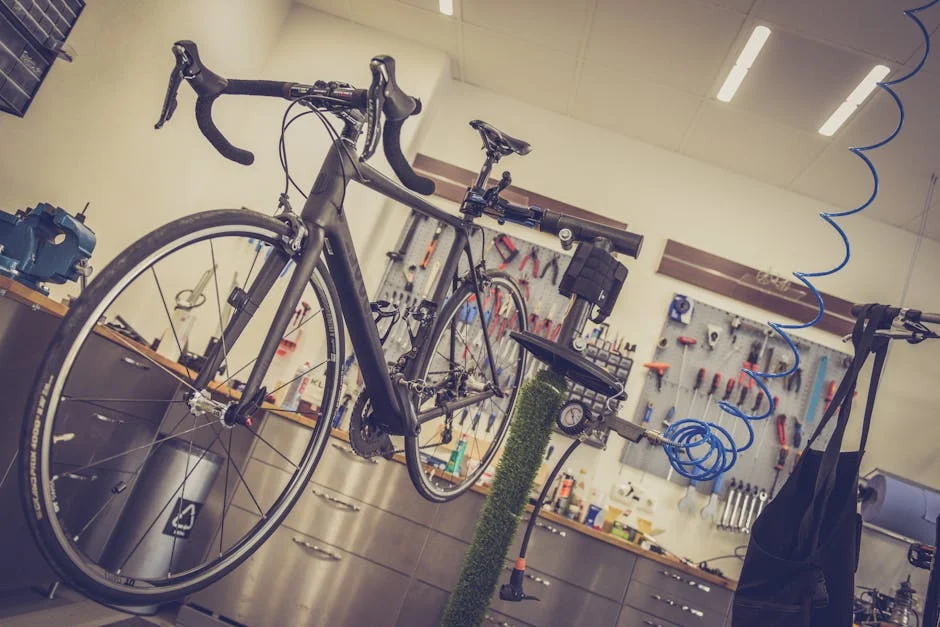
Yes, meaningfully. A floor stand with a quality clamp and appropriate weight rating gives you full 360-degree access to the bike, which makes drivetrain work, wheel removal, and brake bleeding all significantly easier. A bench or wall mount provides more rigidity for torque-heavy tasks but limits positioning angles. A stand that wobbles or slips under load makes some tasks impossible and creates risk of dropping a heavy e-bike onto the motor or battery housing.

<script type="application/ld+json">
{
"@context": "https://schema.org",
"@type": "FAQPage",
"mainEntity": [
{
"@type": "Question",
"name": "Can a standard bike repair stand handle an e-bike?",
"acceptedAnswer": {
"@type": "Answer",
"text": "Many standard repair stands are rated for weights that fall below the typical e-bike range. Full-suspension e-MTBs commonly weigh between 45 and 55 pounds, and some cargo-style builds exceed 70 pounds. Before using any stand with an e-bike, confirm the published weight capacity against your bike's actual weight. Stands rated at 66 pounds or higher are a safer baseline for most e-bike applications. The CHEPARK's 88-pound rating is one of the clearer specs available in the mid-range category."
}
},
{
"@type": "Question",
"name": "What tools do I need that a standard bike tool kit might not include?",
"acceptedAnswer": {
"@type": "Answer",
"text": "E-bike maintenance introduces a few tool requirements beyond the standard kit. Torx keys in T25 and T30 sizes appear on brake rotor bolts and some motor mount hardware. A torque wrench is important for motor mount fasteners, which have specific newton-meter specifications. Depending on your bottom bracket standard, you may also need a shell-specific tool. Most general bike kits cover chains, cassettes, and basic drivetrain work adequately."
}
},
{
"@type": "Question",
"name": "Is it worth setting up a home workshop if I'm near a good e-bike repair shop?",
"acceptedAnswer": {
"@type": "Answer",
"text": "Even with reliable shop access, a home workshop pays off over a season of regular riding. Drivetrain cleaning, cable tension adjustments, tire swaps, and brake pad checks are tasks that don't require a certified technician and add up in cost if outsourced consistently. Reviewing the typical ebike tune up cost makes the math clear. A basic home setup recovers its cost after a handful of service visits avoided."
}
},
{
"@type": "Question",
"name": "What maintenance tasks should always go to a certified e-bike technician?",
"acceptedAnswer": {
"@type": "Answer",
"text": "Motor firmware updates for systems like Bosch CX and Shimano EP8 require dealer-level software that is not available to end users. Battery cell replacement and BMS diagnostics also require specialized equipment and carry safety implications if handled incorrectly. Proprietary motor cartridge bearing replacement on some platforms requires manufacturer tooling. Attempting them without the right equipment risks voiding motor warranties and creating safety hazards."
}
},
{
"@type": "Question",
"name": "Does the type of work stand affect what maintenance I can realistically do at home?",
"acceptedAnswer": {
"@type": "Answer",
"text": "Yes, meaningfully. A floor stand with a quality clamp and appropriate weight rating gives you full 360-degree access to the bike, which makes drivetrain work, wheel removal, and brake bleeding all significantly easier. A bench or wall mount provides more rigidity for torque-heavy tasks but limits positioning angles. A stand that wobbles or slips under load makes some tasks impossible and creates risk of dropping a heavy e-bike onto the motor or battery housing."
}
}
]
}
</script>Where to Buy
CXWXC Bike Repair Stand -Shop Home Bicycle Mechanic Maintenance Rack- Bike Workstands for Mountain Bike and Road Bike (rs100) (Black)See CXWXC Bike Repair Stand -Shop Home Bi… on Amazon