500W eBike Motors Explained: What the Wattage Really Means

Affiliate disclosure: Some links on this page are affiliate links. If you buy through them we earn a small commission at no extra cost to you. Recommendations are research-driven; we don't claim personal use of every product reviewed. Product prices and availability are accurate as of the date published and are subject to change. Always check Amazon for current pricing before purchasing. Learn more.
Quick Picks
Unbranded Folding Electric Bike for Adults, 500W Motor 25MPH & 35Miles Long Range, 14” Mini E-Bike with Removable 48V 576Wh Battery, UL Certified Electric Bicycle for Commuting & Teens
500W motor and 35-mile range enable longer commutes per charge
Buy on AmazonYorkE 26“ Electric Bike for Adult,1000W Peak, up 80 Miles Removable Battery Ebike,Adult Electric Bicycles for All Terrain,Men Women E Bike, 7-Speed
1000W peak motor provides strong acceleration and hill climbing
Buy on AmazonRM7 Electric Dirt Bike for Adults & Teens, 2200W Peak Ebike, 48V 22.5Ah, 37 MPH, 45 Miles, 14"/12" Tire Off-Road Electric Motorcycle, Dual Hydraulic Brakes, Fit Age 13+
2200W peak power and 48V 22.5Ah battery enable 37 MPH top speed
Buy on Amazon| Product | Price Range | Top Strength | Key Weakness | Buy |
|---|---|---|---|---|
| Unbranded Folding Electric Bike for Adults, 500W Motor 25MPH & 35Miles Long Range, 14” Mini E-Bike with Removable 48V 576Wh Battery, UL Certified Electric Bicycle for Commuting & Teens also consider | $ | 500W motor and 35-mile range enable longer commutes per charge | Unbranded product may lack established warranty and support network | Buy on Amazon |
| YorkE 26“ Electric Bike for Adult,1000W Peak, up 80 Miles Removable Battery Ebike,Adult Electric Bicycles for All Terrain,Men Women E Bike, 7-Speed also consider | $$ | 1000W peak motor provides strong acceleration and hill climbing | Budget brand positioning typically means fewer premium components | Buy on Amazon |
| RM7 Electric Dirt Bike for Adults & Teens, 2200W Peak Ebike, 48V 22.5Ah, 37 MPH, 45 Miles, 14"/12" Tire Off-Road Electric Motorcycle, Dual Hydraulic Brakes, Fit Age 13+ also consider | $$ | 2200W peak power and 48V 22.5Ah battery enable 37 MPH top speed | High-performance electric dirt bikes typically cost more than gas alternatives | Buy on Amazon |
The “500W ebike” label shows up on everything from folding commuters to off-road rippers, and the number alone tells you almost nothing useful. Continuous rated wattage, peak wattage, and nominal wattage are three different measurements that manufacturers use interchangeably, which means a 500W motor on one bike can feel completely different from a 500W motor on another.
Understanding what sits behind the spec sheet matters more than the number itself. The sections below break down how motor wattage translates to real-world performance, what else to evaluate before buying, and which bikes earn a closer look at different use cases.
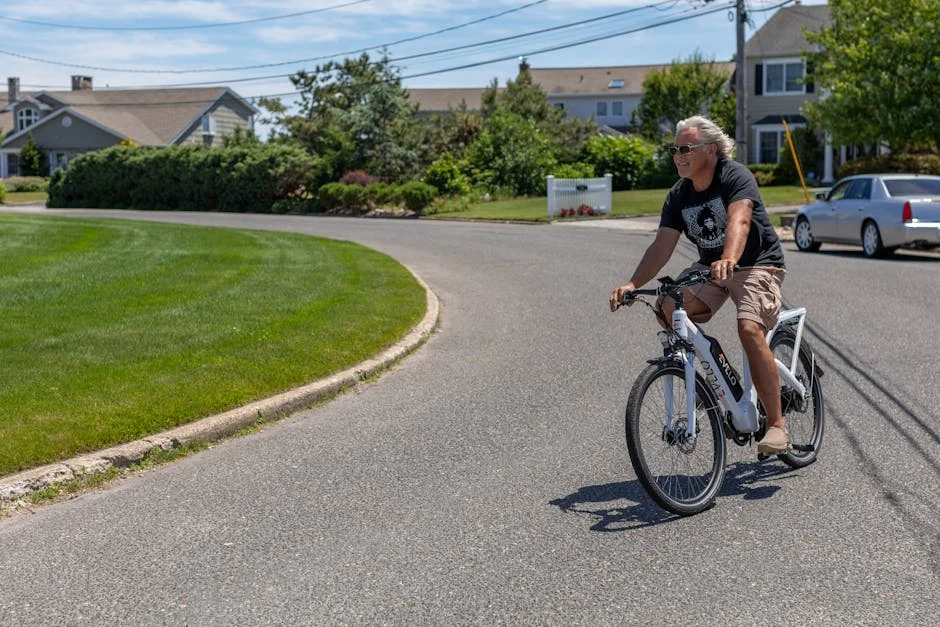
What “500W” Actually Means on an Electric Bike
Motor wattage ratings are not standardized across the industry. A bike marketed as a 500W model may have a motor with a 500W continuous rating, meaning it sustains that output under load without overheating. Or the 500W figure may describe peak output, which is a brief ceiling the motor hits during hard acceleration before pulling back. Continuous ratings and peak ratings can differ by a factor of two or more on the same motor, so the headline number is often marketing shorthand rather than a technical specification.
For context on how these numbers connect to handling and range, the Specs & Performance hub covers motor systems across wattage classes with practical benchmarks rather than manufacturer claims.
Torque Sensor vs. Cadence Sensor
How a motor reads your input is often more important than how much wattage it produces. Torque sensors measure actual pedal force and adjust assist proportionally, which creates a natural, responsive feel. Cadence sensors detect pedal rotation and apply a fixed assist level, which can feel abrupt. Most budget 500W systems use cadence sensors. Premium systems, including Bosch CX and Shimano EP8, use torque sensors even at lower wattage ratings, which is part of why a 250W Fazua Ride 60 can feel more capable on technical trail than a 750W cadence-sensor motor on a box-store bike.
Continuous vs. Peak Wattage
When a product listing shows “500W motor” without specifying continuous or peak, treat it as ambiguous until you can find the motor datasheet. A 500W continuous motor will handle sustained climbs without throttling back. A motor rated 500W peak may deliver that output for only a few seconds before the controller reduces power to protect the system. For flat commuting, this distinction matters less. For extended climbing at altitude, it matters significantly.
Range Claims and Real-World Expectations
Manufacturer range figures are almost universally optimistic. Most brands test on flat pavement, at low assist levels, with a lightweight rider and moderate temperatures. Real-world range on rolling terrain with higher assist engagement drops considerably. A claimed 35-mile range on a flat-pavement test might translate to 20 to 22 miles of mixed terrain with moderate elevation. Budget 48V systems in cold weather lose additional capacity as lithium cells drop in efficiency below 40 degrees Fahrenheit. Build your route planning around 50 to 60 percent of the claimed range figure as a conservative floor.
Top Picks
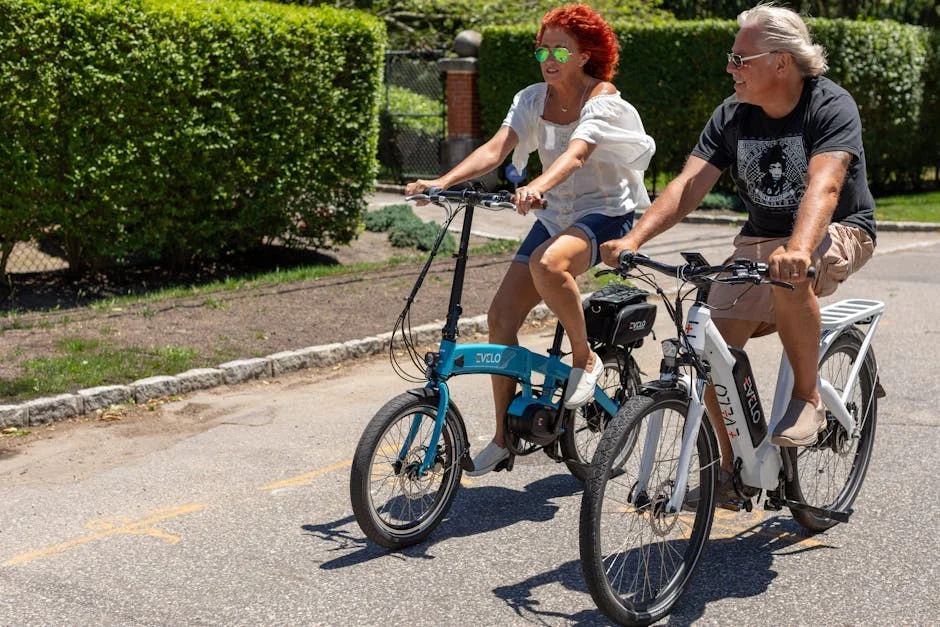
Folding Electric Bike for Adults, 500W Motor 25MPH and 35 Miles Long Range
The Folding Electric Bike for Adults positions itself as a compact, high-range option in the budget folding category. The 48V 576Wh battery is a legitimate spec for this price band, and the removable design means you can pull it from the bike and charge it at a desk or inside an apartment without rolling the whole bike into an elevator. The 500W motor paired with that battery capacity is where the 35-mile claim comes from, though that figure reflects flat-pavement testing conditions.
The 14-inch wheels are the most significant functional trade-off here. Smaller wheels roll over bumps with less compliance, transmit more road feedback to the rider, and require more steering input to stay stable at higher speeds. For short urban hops and last-mile scenarios, this is acceptable. For anything involving rough pavement, gravel shoulders, or consistent 20-plus mph operation, the ride quality gap versus a 20-inch or 26-inch wheel platform is noticeable. Verified buyers note the folding mechanism and overall build feel solid for the price tier, but the unbranded nature of the product means warranty support and replacement parts depend heavily on the seller relationship rather than a manufacturer service network.
Check current price on Amazon.
YorkE 26” Electric Bike for Adults, 1000W Peak
The YorkE 26” Electric Bike operates in a different use-case category from the folding option above. The 26-inch wheel format rolls over surface variation more smoothly, and the 7-speed drivetrain means you can manage cadence across grades rather than relying entirely on the motor to compensate for hills. The 1000W peak figure deserves the same scrutiny as any peak rating: field reports from buyer communities indicate the sustained output is lower, which is standard practice in this segment, but the acceleration feel and hill-climbing response are consistently described as strong for a mid-range platform.
The 80-mile range claim is almost certainly a best-case flat-pavement figure at minimal assist. Real-world numbers from owner reports cluster closer to 40 to 50 miles under mixed conditions with moderate assist engagement, which is still a functional range for extended commuting or multi-stop errand runs. The removable battery is a genuine practical advantage, particularly for riders who park in locations without outlet access near the bike. One consistent note from buyer feedback is that component quality reflects the price tier, meaning the brakes, shifters, and saddle are functional but not premium, and some riders upgrade the braking system after purchase.
Check current price on Amazon.
RM7 Electric Dirt Bike for Adults and Teens, 2200W Peak
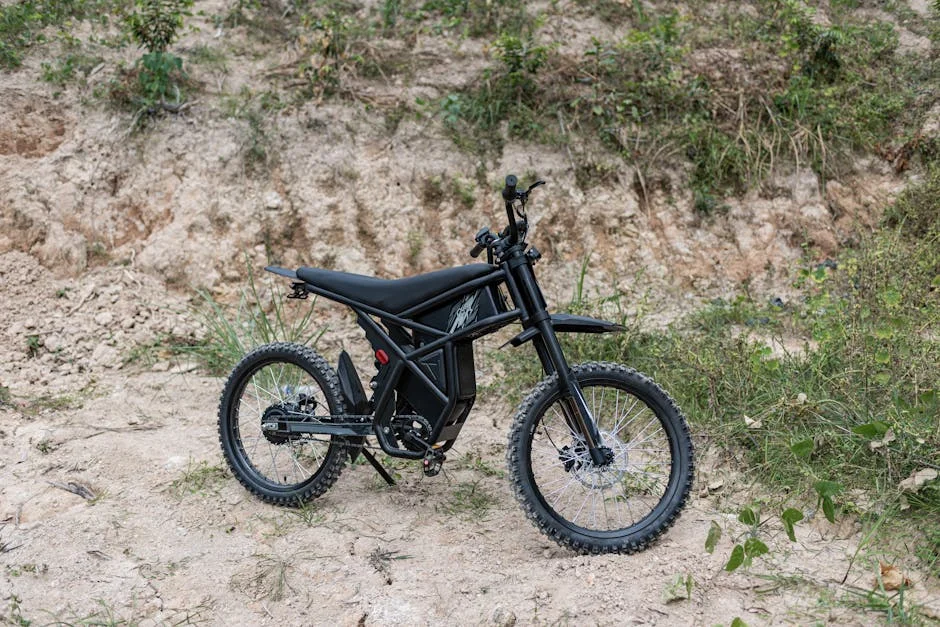
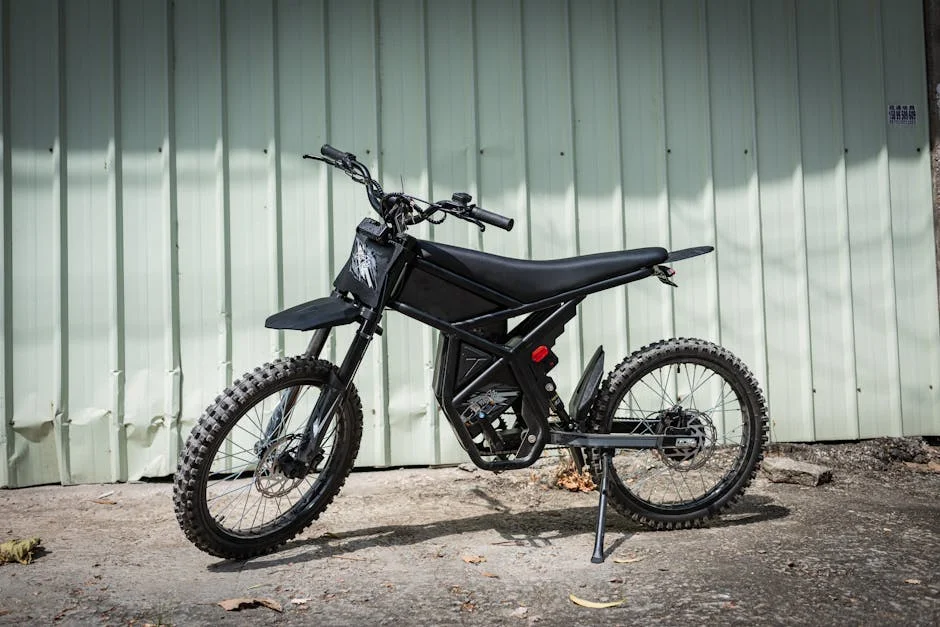
The RM7 Electric Dirt Bike is a different product category entirely. This is not a pedal-assist commuter with off-road styling. The 2200W peak figure, 37 MPH top speed, and throttle-dominant operation put it closer to an electric motorcycle than a Class 2 or Class 3 ebike. The 48V 22.5Ah battery is a substantial pack for this form factor, and the claimed 45-mile range at lower throttle settings is plausible given the capacity. The dual hydraulic brake spec is appropriate for a platform capable of 37 MPH, and buyer field reports confirm the braking feel is a step above mechanical systems common at this price tier.
The mixed wheel sizing, 14-inch front and 12-inch rear, is an unusual configuration that the manufacturer frames as terrain-optimized. Practically, it shortens the wheelbase relative to matching wheel sizes, which affects low-speed stability. Riders using this on loose dirt or pump tracks report that the shorter rear wheel handles pumping and technical maneuvering acceptably, though experienced trail riders accustomed to longer-travel full-suspension geometry will feel the difference immediately. The age 13-plus designation and compact dimensions reflect the intended user base: younger riders and adults who want a small-footprint off-road platform rather than a full-size motorcycle replacement. Access to service and parts support is worth confirming before purchase, as with any emerging brand in this segment.
Check current price on Amazon.
Buying Guide: What to Evaluate Before Choosing a 500W Ebike
Motor Type and Sensor Technology
The wattage rating is a starting point, not a conclusion. The more useful question is whether the motor uses a torque sensor or cadence sensor, and whether the controller allows configurable assist levels. A torque-sensing 500W system will respond to your pedaling input with proportional assist, which feels natural and lets you modulate effort precisely. A cadence-sensing system fires at a fixed level once your cranks are turning, which can feel jerky on inclines and wastes battery on flat sections where you don’t need full assist. For technical riding context, the Specs & Performance hub goes deeper on how sensor type affects feel across different terrain categories.
Battery Capacity and Real-World Range
Watt-hours (Wh) is the relevant battery metric, not voltage alone. A 48V 10Ah battery holds 480Wh. A 48V 12Ah battery holds 576Wh. More watt-hours means more range, assuming similar motor efficiency. When comparing two 500W bikes, compare their Wh figures alongside the range claim to spot whether the range estimate is plausible. A 480Wh pack claiming 60 miles of range on varied terrain is mathematically aggressive. The same pack claiming 30 miles is believable. Cold-weather riders should factor in an additional 10 to 20 percent range reduction below 40 degrees Fahrenheit.
Wheel Size and Ride Quality
Wheel diameter directly affects ride comfort, stability at speed, and the ability to roll over surface imperfections. Fourteen-inch wheels are compact and fold easily, making them suitable for portability-focused use cases. Twenty-inch wheels balance compactness with meaningfully better rollover ability. Twenty-six-inch and 27.5-inch wheels are full adult sizes that track predictably and absorb surface variation more naturally. If the primary use case involves consistent riding on anything other than smooth pavement, wheel size should carry significant weight in the decision. Tire width matters alongside diameter: a 26x2.0 tire handles varied surfaces more forgivingly than a 26x1.75 tire on the same platform.
Braking System
Hydraulic disc brakes and mechanical disc brakes both stop a bike, but hydraulic systems require less hand force for the same stopping power and self-adjust for pad wear. On a platform capable of 25 to 37 MPH with a motor adding speed on descents, brake quality is not a component to undervalue. Verified buyer reports on budget 500W platforms frequently cite brake upgrades as a near-term modification, particularly for heavier riders or anyone using the bike in hilly terrain. Checking whether the brake spec is mechanical or hydraulic before purchase avoids a common post-purchase friction point.
Frame Material and Long-Term Durability
Aluminum alloy is standard across budget and mid-range ebike frames and handles normal use reliably. The variables that affect long-term durability are weld quality, water resistance of the battery compartment, and whether the motor housing seals adequately against dust and rain. UL certification on the battery is a meaningful safety indicator, confirming the cells and battery management system passed independent testing for thermal runaway protection. For buyers who will use the bike daily in variable weather, checking whether the product carries a recognized certification is worth the time before purchase.
Frequently Asked Questions
Is a 500W motor enough for hills?
A 500W continuous motor handles moderate grades acceptably for most adult riders, particularly on a lighter folding platform. Steeper sustained climbs, especially at altitude or with a heavier rider and cargo load, will push a 500W motor toward its thermal limits faster than a higher-rated system. Rider weight, grade percentage, and assist level all factor into whether 500W feels sufficient. Most urban and suburban riders find it more than adequate for typical street grades.
What is the difference between 500W continuous and 500W peak?
Continuous wattage is the output a motor sustains indefinitely without overheating. Peak wattage is the maximum output for a brief period, typically a few seconds during hard acceleration. A motor rated 500W peak may sustain only 250W to 350W under load. When a product listing does not specify which rating applies, treat the figure as likely a peak number.
How far can a 500W ebike actually go on one charge?
Real-world range depends on battery capacity in watt-hours, terrain, rider weight, assist level, and temperature. Manufacturer claims typically reflect flat pavement at low assist. Expect 50 to 65 percent of the claimed range figure under mixed conditions with moderate assist engagement. A bike claiming 35 miles under ideal conditions will likely deliver 18 to 23 miles on varied terrain.
Are 500W ebikes street legal?
In the United States, federal law classifies electric bicycles by motor wattage and speed. Class 1 and Class 2 bikes are limited to 750W and 20 MPH. Class 3 bikes allow up to 750W and 28 MPH. A 500W motor falls within the federal ceiling, but top speed and whether the bike operates with or without pedaling also factor into classification.
What should I check before buying a budget 500W ebike?
Confirm whether the wattage figure is continuous or peak, check the battery capacity in watt-hours rather than relying on voltage alone, and verify whether the battery carries UL or equivalent certification. Look for whether the braking system is hydraulic or mechanical disc, and read verified buyer reviews specifically for comments on build quality and customer support responsiveness. Unbranded or emerging-brand products can represent solid value, but the warranty and parts support chain is worth understanding before purchase rather than after a component fails.
<script type="application/ld+json">
{
"@context": "https://schema.org",
"@type": "FAQPage",
"mainEntity": [
{
"@type": "Question",
"name": "Is a 500W motor enough for hills?",
"acceptedAnswer": {
"@type": "Answer",
"text": "A 500W continuous motor handles moderate grades acceptably for most adult riders, particularly on a lighter folding platform. Steeper sustained climbs, especially at altitude or with a heavier rider and cargo load, will push a 500W motor toward its thermal limits faster than a higher-rated system. Rider weight, grade percentage, and assist level all factor into whether 500W feels sufficient. Most urban and suburban riders find it more than adequate for typical street grades."
}
},
{
"@type": "Question",
"name": "What is the difference between 500W continuous and 500W peak?",
"acceptedAnswer": {
"@type": "Answer",
"text": "Continuous wattage is the output a motor sustains indefinitely without overheating. Peak wattage is the maximum output for a brief period, typically a few seconds during hard acceleration. A motor rated 500W peak may sustain only 250W to 350W under load. When a product listing does not specify which rating applies, treat the figure as likely a peak number. Continuous ratings provide a more reliable picture of hill-climbing and sustained-assist performance."
}
},
{
"@type": "Question",
"name": "How far can a 500W ebike actually go on one charge?",
"acceptedAnswer": {
"@type": "Answer",
"text": "Real-world range depends on battery capacity in watt-hours, terrain, rider weight, assist level, and temperature. Manufacturer claims typically reflect flat pavement at low assist. Expect 50 to 65 percent of the claimed range figure under mixed conditions with moderate assist engagement. A bike claiming 35 miles under ideal conditions will likely deliver 18 to 23 miles on varied terrain. A 80-mile claim translates more realistically to 40 to 50 miles in practical use."
}
},
{
"@type": "Question",
"name": "Are 500W ebikes street legal?",
"acceptedAnswer": {
"@type": "Answer",
"text": "In the United States, federal law classifies electric bicycles by motor wattage and speed. Class 1 and Class 2 bikes are limited to 750W and 20 MPH. Class 3 bikes allow up to 750W and 28 MPH. A 500W motor falls within the federal ceiling, but top speed and whether the bike operates with or without pedaling also factor into classification. State and local laws vary, and some products in the 500W range, particularly throttle-dominant models with higher top speeds, may face restrictions on certain paths or roads."
}
},
{
"@type": "Question",
"name": "What should I check before buying a budget 500W ebike?",
"acceptedAnswer": {
"@type": "Answer",
"text": "Confirm whether the wattage figure is continuous or peak, check the battery capacity in watt-hours rather than relying on voltage alone, and verify whether the battery carries UL or equivalent certification. Look for whether the braking system is hydraulic or mechanical disc, and read verified buyer reviews specifically for comments on build quality and customer support responsiveness. Unbranded or emerging-brand products can represent solid value, but the warranty and parts support chain is worth understanding before purchase rather than after a component fails."
}
}
]
}
</script>Where to Buy
Unbranded Folding Electric Bike for Adults, 500W Motor 25MPH & 35Miles Long Range, 14” Mini E-Bike with Removable 48V 576Wh Battery, UL Certified Electric Bicycle for Commuting & TeensSee Folding Electric Bike for Adults, 500… on Amazon