48V Lithium Battery for Electric Bike: Top Picks Reviewed

Affiliate disclosure: Some links on this page are affiliate links. If you buy through them we earn a small commission at no extra cost to you. Recommendations are research-driven; we don't claim personal use of every product reviewed. Product prices and availability are accurate as of the date published and are subject to change. Always check Amazon for current pricing before purchasing. Learn more.
Quick Picks
Unbranded 48V Electric Bike Battery LG4800 21700 Cell for Ebike Conversion Wheel Kit and Rad Power Runner City - Lithium Ion eBike Battery for 48Volt 500W 750W 1500W Bafang and Other Kit(20Ah)
48V capacity suitable for e-bike conversion kits and specific models
Buy on AmazonUnbranded 48V Lithium Battery Charger – UL Certified 54.6V 2A Fast Charger for Electric Bike, with Auto Shutoff, Intelligent Temperature Control & Fire-Resistant Case
UL certified for safety and regulatory compliance
Buy on AmazonUnbranded 48V E-Bike Battery, Silver Fish Lithium Batteries 30A BMS, Safe Lock, Led Indicator Light for Controller 0W-1000W Electric Bike Bicycles Motor (48V 15AH 0-1000W)
30A BMS provides built-in safety protection for charging
Buy on Amazon| Product | Price Range | Top Strength | Key Weakness | Buy |
|---|---|---|---|---|
| Unbranded 48V Electric Bike Battery LG4800 21700 Cell for Ebike Conversion Wheel Kit and Rad Power Runner City - Lithium Ion eBike Battery for 48Volt 500W 750W 1500W Bafang and Other Kit(20Ah) best overall | $ | 48V capacity suitable for e-bike conversion kits and specific models | Unbranded product may lack manufacturer support and warranty clarity | Buy on Amazon |
| Unbranded 48V Lithium Battery Charger – UL Certified 54.6V 2A Fast Charger for Electric Bike, with Auto Shutoff, Intelligent Temperature Control & Fire-Resistant Case also consider | $$ | UL certified for safety and regulatory compliance | Unbranded products may lack established warranty or support | Buy on Amazon |
| Unbranded 48V E-Bike Battery, Silver Fish Lithium Batteries 30A BMS, Safe Lock, Led Indicator Light for Controller 0W-1000W Electric Bike Bicycles Motor (48V 15AH 0-1000W) also consider | $$ | 30A BMS provides built-in safety protection for charging | Unbranded product may lack established customer support network | Buy on Amazon |
Choosing a 48V lithium battery for electric bike use means sorting through a crowded field of cells, capacity claims, and BMS configurations, and getting it wrong costs more than money. A mismatched battery can limit your motor’s output, shorten your range, or degrade faster than it should. The Batteries & Charging hub covers the full landscape here, but this guide focuses on three of the strongest-reviewed options available for conversion kits, commuter builds, and entry-level dedicated e-bikes.
Range figures from manufacturers are close to useless as real-world benchmarks. Most testing happens on flat pavement at low assist levels. On climbing terrain, Front Range singletrack, loaded cargo runs, or any route with meaningful elevation gain, expect 40, 60% of the stated range under regular assist demand.

What to Look For in a 48V Lithium E-Bike Battery
Cell Quality and Chemistry
The single biggest determinant of a battery’s long-term performance is the quality of the cells inside. Most 48V packs use either 18650 or 21700 cylindrical lithium-ion cells. The 21700 format is newer and generally offers higher energy density, meaning more capacity for a given physical size, and better thermal performance under sustained load.
Brand-name cells from manufacturers like LG, Samsung, or Panasonic carry documented discharge curves and cycle-life ratings. Generic or unlabeled cells vary considerably. Packs that specify their cell type and manufacturer by name are worth paying attention to; packs that don’t tell you what’s inside deserve skepticism. Verified buyer reports consistently show that cell quality is the leading predictor of whether a battery holds its capacity through 300, 500 charge cycles.
BMS Specifications, What They Actually Mean
The Battery Management System governs charge cutoff, discharge limits, short-circuit protection, and temperature-based throttling. A 30A BMS rating means the pack can sustain 30 amps of continuous discharge, that’s the number that matters for motor compatibility, not the nominal voltage. A 750W motor drawing full power at 48V requires roughly 16A continuous. A 1,500W motor can draw over 30A at peak.
Mismatch the BMS to your motor and you’ll either trigger cutoffs under load or run the pack outside its safe operating window. Check your controller’s maximum current draw, then confirm the BMS rating clears it with margin. This is a spec you need to verify before ordering, not after.
Capacity: Ah, Wh, and Real-World Range
Capacity is stated in amp-hours (Ah) or watt-hours (Wh). To convert: multiply Ah × voltage. A 15Ah 48V pack contains 720Wh; a 20Ah pack contains 960Wh. On flat pavement at low assist, manufacturers often claim 40, 60 miles per charge on a 720Wh pack. On hilly terrain with mid or high assist, that same pack may realistically deliver 25, 35 miles.
For commuters on flat routes, 15Ah is often sufficient. For riders covering longer distances, carrying cargo, or climbing regularly, 20Ah is the more practical choice. The full range of e-bike battery options is worth reviewing before settling on a capacity, the right answer depends heavily on your specific route profile.
Form Factor and Mounting Compatibility
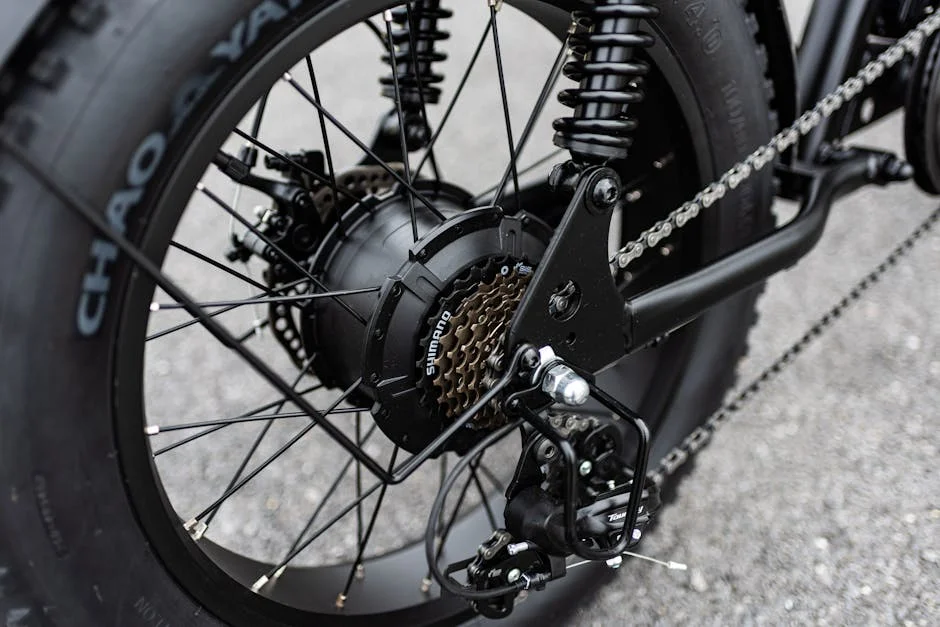
48V batteries come in several physical form factors: frame-mounted downtube packs, rear rack-mount configurations, and external “silver fish” or “shark” style packs that mount to a frame bracket. Frame-integrated packs suit purpose-built e-bike frames with dedicated battery slots. External packs are typically used on conversion kits or bikes without built-in battery mounts.
Measure your available mounting space before selecting. A 20Ah pack is physically larger and heavier than a 15Ah pack from the same manufacturer. Weight distribution also matters, a rear rack battery raises your center of gravity differently than a downtube pack, which affects handling particularly at low speed.
Connector and Voltage Compatibility
Most conversion kits and controllers specify a connector type: XT60, Anderson, or proprietary options. Ordering a battery with the wrong connector requires either an adapter or a splice, both introduce failure points. Confirm the connector your controller expects before ordering.
Voltage matters at the charger level too. A 48V lithium pack charges to 54.6V at full charge, which is why 48V chargers are rated at 54.6V output. Using a mismatched charger, even one that’s close, risks overcharging cells or triggering BMS protection cutoffs that won’t resolve without a proper charger.
Top Picks
48V Electric Bike Battery LG4800 21700 Cell
The 48V Electric Bike Battery LG4800 21700 Cell is the strongest-specified option in this group, built around LG’s 21700 cells, a meaningful upgrade over the older 18650 format in energy density and sustained discharge performance. Owner reports confirm it fits Rad Power Bikes, Bafang conversion kits, and a range of generic hub motor setups without modification issues.
At 20Ah and 48V, this pack contains 960Wh of usable capacity. That puts it in the upper tier of what a standard e-bike frame can accommodate without going to a dual-battery setup. For conversion builds running 750W or 1,500W Bafang motors specifically, verified buyers consistently note compatibility with standard Bafang controllers and a charge cycle behavior that stays predictable well past 200 cycles.
The LG cell specification is the deciding factor here. It’s not just a marketing claim, 21700 LG cells carry published cycle-life and discharge data, and packs built with them behave accordingly under sustained load. For any build where range under climbing load matters, this is the pack to start with.
Check current price on Amazon.
48V Lithium Battery Charger, UL Certified 54.6V 2A
The 48V Lithium Battery Charger, UL Certified 54.6V 2A addresses something many first-time battery buyers overlook entirely: the quality of what they plug into the wall. A UL certification on a lithium charger is not a formality, it means the unit has been independently tested for overvoltage protection, thermal behavior, and fire resistance, which matters for a device left plugged in overnight.
Auto-shutoff at full charge is standard behavior at this price tier, but the intelligent temperature control here provides additional protection during warm-weather charging or in enclosed spaces. The fire-resistant case construction is a design choice that reflects real-world failure mode awareness. Lithium charger fires are rare but they do happen, almost always with uncertified units under thermal stress.
At 2A output, this charger is on the slower end of the 48V charging spectrum. A 20Ah pack will take approximately 10 hours to charge from near-empty. For overnight charging routines that’s rarely a constraint, but riders who need a fast turnaround in the middle of a day should factor in the charge time.
Check current price on Amazon.
48V E-Bike Battery, Silver Fish Lithium Batteries 30A BMS
The 48V E-Bike Battery, Silver Fish Lithium Batteries 30A BMS is the most broadly compatible physical form factor for conversion kit builds. The silver fish design mounts externally to a frame bracket rather than integrating with a downtube slot, which makes it usable on a wider range of bike frames, including steel and aluminum hardtails that weren’t designed for e-bike drivetrains.
The 30A BMS is the specification worth noting. For motor systems up to 1,000W, a 30A continuous discharge rating provides adequate headroom under full load without triggering protection cutoffs on climbs. The LED indicator light and safe-lock mechanism are practical additions: the LED gives state-of-charge information at a glance without connecting a display, and the lock prevents the pack from vibrating loose on rough terrain.
At 15Ah, this pack carries 720Wh, less raw capacity than the LG4800 option, but sufficient for commuters and lighter-use conversion builds on relatively flat routes. The broad motor compatibility range (0, 1,000W) and universal mounting format make it a practical choice for builders who are still speccing the rest of their drivetrain and need flexibility.
Check current price on Amazon.
Buying Guide
Motor Wattage and BMS Current Rating
Motor wattage and BMS amperage need to be matched, not just roughly compatible. A 500W motor at 48V draws roughly 10, 11A under sustained load. A 750W motor draws closer to 16A. A 1,500W motor can demand 30A or more at peak. The BMS in your battery needs to sustain that current draw continuously without triggering its protection cutoff.
The consequence of getting this wrong isn’t always obvious immediately. A BMS that’s borderline-undersized may function normally on flat ground and only cut out on long climbs, when current demand stays elevated for extended periods. Build in headroom, if your motor’s peak draw is 25A, a 30A BMS is a minimum, not a ceiling.
Capacity for Your Use Case
Fifteen amp-hours is adequate for most urban commutes under 20 miles round trip on mostly flat terrain. Twenty amp-hours serves longer commutes, cargo bikes, and any route with consistent elevation gain. The math is straightforward: multiply your pack’s Ah by 48V to get watt-hours, then estimate roughly 20, 25Wh per mile on moderate terrain in mid-assist.
Riders on hilly routes or those running high assist regularly should target 20Ah minimum. The heavier pack is worth carrying if the alternative is range anxiety mid-route. For conversion builds that already carry extra frame weight, confirm the total system weight stays manageable before sizing up.
Charger Certification and Overnight Safety
Any lithium charger left plugged in unattended overnight should carry UL or CE certification. Uncertified chargers from unknown manufacturers are the most common source of lithium battery fires in the e-bike space, not the batteries themselves. The Batteries & Charging section covers this in more detail, but the short version is: match your charger to your battery’s chemistry and full-charge voltage (54.6V for 48V packs), and don’t buy a charger that can’t tell you what happens when the pack reaches full charge.
Auto-shutoff is non-negotiable. Temperature-controlled output is worth paying for in hot climates or for riders who charge in enclosed spaces like apartments or garages.
Form Factor and Frame Compatibility
Silver fish and external bracket-mount packs work on almost any frame. Downtube-integrated packs require a frame designed for them. If you’re building on a repurposed mountain or road bike frame, assume you need an external-mount pack unless the frame has a documented battery slot.
Physical dimensions matter too. Verify the pack’s stated dimensions against your frame’s available clearance, particularly for full-suspension frames where the rear triangle or linkage may conflict with a longer pack. Manufacturer dimension specs are usually accurate; take them seriously before ordering.
Cell Type and Long-Term Degradation
A battery pack’s capacity degrades over charge cycles. Quality lithium-ion packs using name-brand cells (LG, Samsung, Panasonic) typically retain 80% capacity through 500 cycles. Generic cell packs degrade faster and less predictably. If a pack doesn’t specify the cell brand and format, treat the capacity claim and cycle-life claim with skepticism.
Storage behavior matters too. Lithium cells stored at full charge or fully depleted degrade faster than those stored at 40, 60% charge. If your bike sits unused for weeks at a time, partially discharging the pack before storage extends its useful life measurably.
Frequently Asked Questions
What does a 30A BMS mean and why does it matter for my motor?
The BMS amperage rating defines the maximum continuous current the battery can safely deliver. A 30A BMS can sustain 30 amps without triggering protection cutoffs, sufficient for motors up to approximately 1,000, 1,200W at 48V. Running a higher-draw motor through an undersized BMS causes cutouts under load, particularly on climbs where current demand stays elevated. Always confirm your motor’s peak amperage draw before selecting a pack.
What is the real-world range difference between a 15Ah and 20Ah 48V pack?
On flat terrain at low assist, the difference is roughly 10, 15 miles in favor of the 20Ah pack. On hilly terrain or at higher assist levels, both packs deliver significantly less than spec, typically 40, 60% of manufacturer claims, but the 20Ah pack’s larger reserve means more usable distance before the battery management system starts throttling output. For routes with consistent climbing, the 20Ah option like the 48V Electric Bike Battery LG4800 21700 Cell is the more practical choice.
Is a UL-certified charger necessary, or is it just a marketing label?
UL certification on a lithium charger means independent lab testing confirmed the unit meets specific overvoltage, thermal, and fire-safety standards. It’s not a marketing label. The 48V Lithium Battery Charger, UL Certified 54.6V 2A carries this certification alongside auto-shutoff and temperature-controlled output. For any charger left plugged in overnight, certification status is a meaningful safety distinction, uncertified chargers under thermal stress are the leading cause of lithium e-bike charging incidents.
Can I use a silver fish battery on a full-suspension mountain bike frame?
Silver fish packs mount externally to a frame bracket, which makes them adaptable to most frame geometries, but full-suspension frames introduce clearance complications. The rear triangle, linkage pivot points, and bottom bracket area may conflict with a longer or wider external pack depending on travel and frame design. Measure the available mounting zone on your specific frame and compare against the pack’s stated dimensions before ordering the 48V E-Bike Battery, Silver Fish Lithium Batteries 30A BMS or any external-mount option.
Why do 48V batteries use a 54.6V charger?
Lithium-ion cell chemistry reaches full charge at a higher voltage than the nominal pack voltage. A 48V pack is built from cells with a nominal voltage of 3.6, 3.7V; at full charge, each cell reaches 4.2V. Across a 13S configuration (the standard for 48V packs), that yields a full-charge voltage of 54.6V. Using a charger rated below 54.6V will leave the pack undercharged; using one rated above risks overcharging cells past their safe ceiling.
Where to Buy
Unbranded 48V Electric Bike Battery LG4800 21700 Cell for Ebike Conversion Wheel Kit and Rad Power Runner City - Lithium Ion eBike Battery for 48Volt 500W 750W 1500W Bafang and Other Kit(20Ah)See 48V Electric Bike Battery LG4800 2170… on Amazon