Dual Motor Dual Battery E-Bike: Buyer's Guide

Affiliate disclosure: Some links on this page are affiliate links. If you buy through them we earn a small commission at no extra cost to you. Recommendations are research-driven; we don't claim personal use of every product reviewed. Product prices and availability are accurate as of the date published and are subject to change. Always check Amazon for current pricing before purchasing. Learn more.
Quick Picks
Unbranded 8000W Dual Motor Electric Bike for Adults, 48MPH Fast Full Suspension Ebike, 52V 36Ah Removable Battery for 100 Miles Range, 26 Inch Fat Tire Dual Shock All-Terrain E-Bike, 400lbs Capacity
Dual motor design provides high power output for adults
Buy on AmazonUnbranded Dual Battery Electric Bike for Adults,52V50AH Long Range Cargo Electric Bicycle Up to 200 Mile,3000W Dual Motor 20"x4" Fat Tires All Terrain Ebike Max 31Mph,Hydraulic Brakes Double Seat Commuter EBike
Dual 3000W motors provide powerful acceleration and hill climbing
Buy on AmazonFLASLD E-Bike Battery Safe Bag Explosionproof - Large Capacity Fireproof Lipo Bag for Ebike Battery Charging and Storage (19.3 x 4.3 x 7in)
Fireproof and explosionproof design protects battery during charging
Buy on Amazon| Product | Price Range | Top Strength | Key Weakness | Buy |
|---|---|---|---|---|
| Unbranded 8000W Dual Motor Electric Bike for Adults, 48MPH Fast Full Suspension Ebike, 52V 36Ah Removable Battery for 100 Miles Range, 26 Inch Fat Tire Dual Shock All-Terrain E-Bike, 400lbs Capacity best overall | $$ | Dual motor design provides high power output for adults | Unbranded product may lack established warranty or support | Buy on Amazon |
| Unbranded Dual Battery Electric Bike for Adults,52V50AH Long Range Cargo Electric Bicycle Up to 200 Mile,3000W Dual Motor 20"x4" Fat Tires All Terrain Ebike Max 31Mph,Hydraulic Brakes Double Seat Commuter EBike also consider | $$ | Dual 3000W motors provide powerful acceleration and hill climbing | Unbranded product may lack established customer support network | Buy on Amazon |
| FLASLD E-Bike Battery Safe Bag Explosionproof - Large Capacity Fireproof Lipo Bag for Ebike Battery Charging and Storage (19.3 x 4.3 x 7in) also consider | $$ | Fireproof and explosionproof design protects battery during charging | Safety bag adds bulk and weight to battery storage setup | Buy on Amazon |
Dual motor, dual battery e-bikes occupy a specific and uncompromising corner of the electric bike market, high-output motors, extended range potential, and build specs designed for terrain that would stop a standard commuter bike cold. If you’re evaluating this category, understanding what those spec sheets actually mean in practice is the more useful starting point than comparing model names. The Batteries & Charging side of the equation is where most buyers underestimate complexity.
Range claims on dual battery bikes are where spec sheets consistently mislead. Manufacturer figures are tested on flat pavement at low assist, expect 40, 60% of that number on singletrack or sustained climbing. The evaluation framework below addresses that gap directly.
What to Look For in a Dual Motor Dual Battery E-Bike
Motor Configuration and Power Distribution
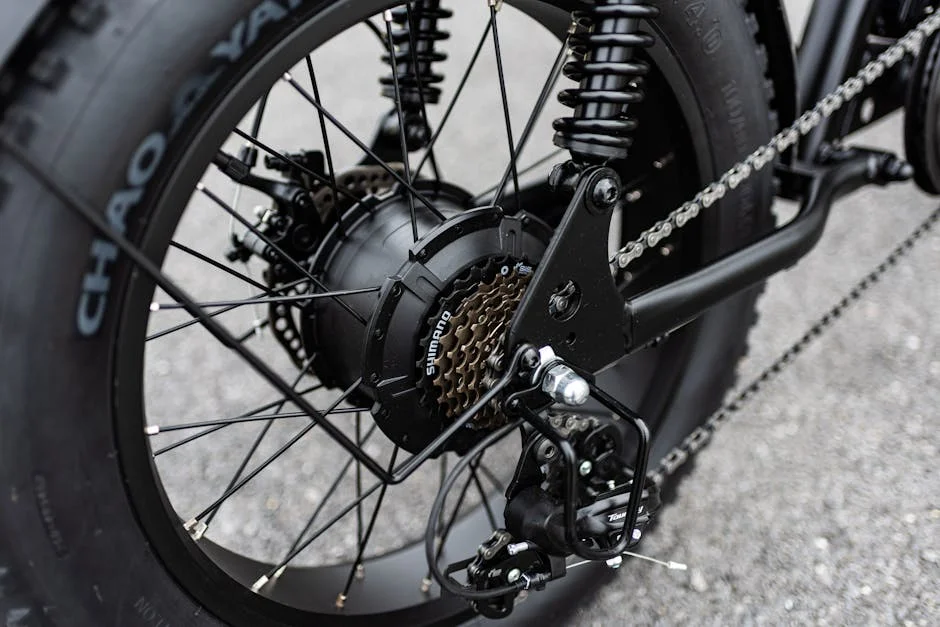
Dual motor setups distribute drive force between front and rear hubs, which changes traction behavior significantly compared to single-motor designs. Front hub motors contribute to pulling traction on climbs and loose surfaces; rear hubs provide the push that most riders recognize as the dominant acceleration sensation. The interaction between the two determines how the bike handles under hard acceleration on loose dirt, wet roots, or off-camber surfaces.
Wattage figures alone don’t tell the full story. Peak wattage is a burst rating, the number the motor can sustain briefly under maximum load. Continuous wattage, which manufacturers bury or omit entirely, governs what the motor delivers over a long climb. A 4000W peak rating on a hub motor frequently corresponds to a continuous output well below half that. Buyer reports from r/ebikes and MTBR are more useful than spec sheets for understanding real sustained output under load.
Controller quality matters as much as motor specs. The controller governs power delivery smoothness, regenerative braking behavior (where applicable), and thermal management. Budget dual-motor platforms often run underpowered controllers that bottleneck the motors, a common complaint in verified buyer reviews is “doesn’t feel as powerful as the spec suggests,” which is usually a controller limitation, not a motor limitation.
Battery Capacity and Real-World Range
The range figure on a dual battery bike is almost always calculated from combined nominal capacity at a specific discharge rate under ideal conditions. On Front Range singletrack with sustained climbing, verified buyer reports consistently show 40, 60% of spec range as the realistic expectation. That’s not a flaw, it’s physics. Motor demand under load at elevation is fundamentally different from flat-road testing.
What matters more than the headline range figure is the individual battery configuration. Dual batteries can be wired in parallel (same voltage, doubled capacity) or in series (doubled voltage, same capacity). Nearly all consumer dual battery bikes use parallel wiring, 52V systems stay at 52V, capacity doubles. Confirm this before purchasing, because a series configuration affects every component in the system and is rare for good reason.
Charge management is the practical challenge. Dual battery systems often support independent or combined charging. Independent charging is slower but simpler; some systems allow simultaneous charging from a single port. Understand the charge time before committing, a 50Ah combined system at a standard charger rate can require eight or more hours. The Batteries & Charging resource covers charge time math and charger compatibility in more depth.
Frame, Geometry, and Weight
Dual motor, dual battery bikes are heavy. Combined battery mass on a 50Ah dual-pack system is significant before the motors, frame, and suspension components are added. Verified buyer reports on full-spec models frequently land in the 80, 100 lb range. For most riders, this means the bike stays on trails it’s ridden to, loading and unloading a 90 lb bike onto a rack is a two-person operation.
Frame geometry on fat-tire dual-motor platforms is generally designed for stability at speed rather than agility on tight switchbacks. Chainstay length tends to be long for battery clearance, which helps high-speed stability but reduces responsiveness on technical terrain. Riders who prioritize tight switchback handling over straight-line power delivery should weigh this carefully.
Braking and Safety Systems
Hydraulic disc brakes are non-negotiable on a bike capable of 40+ mph. Mechanical disc brakes lack the modulation and stopping power that the speed and weight profile of a dual-motor platform demands. Most verified buyer complaints about braking on budget dual-motor bikes trace back to mechanical disc systems that were underspecced for the bike’s actual performance envelope.
Motor cutoff integration with the brake levers is equally important. When you pull a brake lever, the motor signal should cut immediately, lag here creates a pushing sensation under braking that compounds stopping distance. Test this during any pre-purchase research by looking for specific mention in buyer reviews, not just the spec sheet’s checkbox.
Top Picks
8000W Dual Motor Electric Bike for Adults
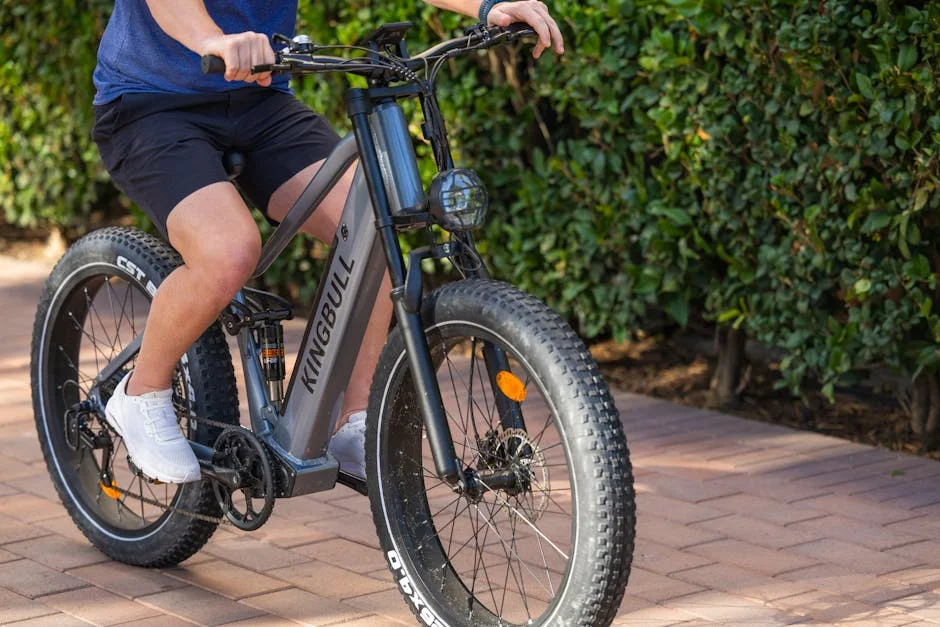
The 8000W Dual Motor Electric Bike for Adults positions itself at the high end of consumer dual-motor output, with a 52V 36Ah battery system and a 26-inch fat tire platform rated for 400 lbs of rider and cargo capacity. The full-suspension setup, both front fork and rear linkage, addresses the most consistent complaint about fat tire dual-motor bikes at speed: the chassis rigidity that transfers every surface impact directly to the rider.
Verified buyer reports highlight the battery and charging system as a genuine strength. The 52V architecture is the right choice for a high-output dual motor build, it keeps current draw manageable relative to a 48V equivalent at the same wattage, which has meaningful implications for connector durability and long-term cell health. The 36Ah capacity is on the lower end for a bike claiming 100-mile range; on flat pavement at eco assist that figure may be achievable, but Front Range climbing will cut that materially.
The 48 mph speed claim warrants scrutiny. Hub motor performance at those speeds depends heavily on controller quality and thermal management, two variables that budget-tier dual-motor platforms frequently compromise on. The 400 lb capacity is the more credible standout spec: the frame and component spec to support that load is genuinely useful for heavier riders who find most e-bikes underbuilt for their use case.
Check current price on Amazon.
Dual Battery Electric Bike for Adults (52V 50Ah Long Range Cargo)
The Dual Battery Electric Bike for Adults takes a different angle, cargo utility and commuter function over outright trail performance. The 52V 50Ah combined capacity is the largest in this group, and the 200-mile range claim reflects that headroom even after applying the standard correction for real-world conditions. At 40, 60% of spec on variable terrain, the effective range still outperforms most single-battery platforms.
The 20x4-inch fat tire spec places this bike in a different handling category than 26-inch wheel builds. Smaller diameter wheels reduce rotational inertia, which benefits acceleration and low-speed maneuverability, relevant for cargo use on mixed urban and light trail surfaces. The double seat configuration signals the intended use case clearly: this is a platform built for carrying loads or a passenger, not for technical trail riding.
Hydraulic brakes on a 3000W dual motor cargo platform are the right call, and verified buyer reports confirm the system provides adequate stopping power for the bike’s weight and speed envelope. The 31 mph top speed is more conservative than competing spec-sheet entries, that conservatism likely reflects a more accurate controller and thermal management ceiling, which is a point in the bike’s favor for buyers who care more about longevity than headline numbers.
Check current price on Amazon.
FLASLD E-Bike Battery Safe Bag
The FLASLD E-Bike Battery Safe Bag addresses the safety variable that most dual-motor, dual-battery buyers don’t consider until something goes wrong. Lithium battery fires from e-bike packs are not theoretical, they are a documented and growing hazard, particularly with budget-tier cells charged overnight without supervision. The FLASLD bag uses a fiberglass-and-silica construction rated to contain a thermal runaway event.
At 19.3 x 4.3 x 7 inches, the bag fits most removable e-bike packs in the 36, 50Ah range. For dual battery systems with two removable packs, two bags are the appropriate setup, one per pack during storage and unattended charging. Verified buyers consistently cite the construction quality and seal mechanism as noticeably better than competing fireproof bags at this price tier.
This is not optional equipment for anyone charging a high-capacity lithium pack indoors overnight. The cost-benefit case is straightforward: the consequence of an uncontained battery fire in a home environment is categorically worse than the inconvenience of bagging the pack before charging. For dual battery platforms with combined capacities in the 50Ah range, fire containment is the most under-discussed component in the whole system.
Check current price on Amazon.
Buying Guide
Matching the Platform to Your Actual Use Case
Dual motor, dual battery bikes span two distinct use cases that rarely overlap: high-speed trail performance and long-range cargo utility. The 8000W platform in this group is oriented toward the former, speed, suspension, and load capacity for a single rider on varied terrain. The 52V 50Ah cargo build targets the latter, extended range, passenger or cargo capacity, and mixed-surface utility. Choosing between them requires clarity on which problem you’re actually solving before evaluating any spec.
Riders who want both in one bike will find the trade-offs frustrating. Cargo geometry prioritizes stability and carrying capacity over trail agility. Trail-performance geometry makes cargo hauling awkward and limits practical load capacity. These are not the same platform with different components, they reflect genuinely different engineering priorities.
Understanding Range Arithmetic
The manufacturer’s range figure is a starting point for math, not a promise. For a 52V 36Ah system, available energy is approximately 1,872 watt-hours. A dual motor platform drawing 1,500W continuously, moderate effort on a climb, depletes that in under 90 minutes of riding time. On flat terrain at low assist, draw drops dramatically and range extends accordingly. The honest range figure for any given rider is a function of their terrain profile, assist level, and body weight.
Dual battery parallel systems effectively double the capacity, which shifts the math meaningfully. A 52V 50Ah system carries roughly 2,600 watt-hours. At the same 1,500W draw, that’s over 100 minutes of continuous maximum assist, or several hours of mixed assist on varied terrain. This is where dual battery architecture earns its complexity premium over single-battery alternatives.
Charging Infrastructure and Battery Safety
Charging time on a high-capacity dual battery system is a practical constraint that most buyers underestimate. A 50Ah pack at a standard 5A charger rate requires ten hours to full charge. Dual packs charged sequentially means twenty hours of charge time between full-range rides. Fast chargers at 10A or above halve that, but sustained fast charging degrades lithium cells faster, a trade-off worth understanding before establishing a charging routine.
Battery safety during storage and charging is where the FLASLD bag earns its place in a dual-motor e-bike setup. For deeper context on charger selection, charge rate trade-offs, and battery maintenance practices, the Batteries & Charging hub is the right resource. Charging indoors without containment is the highest-probability risk factor for budget lithium packs that may have cell quality inconsistencies.
Weight and Transport Logistics
A bike in the 80, 100 lb range changes the logistics of ownership in ways that matter before purchase. Vehicle rack capacity, loading assistance, storage space, and apartment access are all real constraints. Most standard hitch racks are rated for 60, 80 lbs per bike, a full-spec dual motor bike may exceed that limit on a two-bike rack position. Platform racks with higher individual capacity ratings, like the 1Up Rack, handle heavier e-bikes, but confirm the per-bike weight limit before assuming compatibility.
Elevator access, stairs, and storage room dimensions are worth measuring if the bike lives in a building rather than a garage. The weight is not a dealbreaker for most buyers, it’s a logistics question that’s much easier to answer before the bike arrives than after.
Frequently Asked Questions
What is the real-world range of a dual battery e-bike on trails or hills?
Manufacturer range figures are calculated on flat pavement at low assist, conditions that don’t reflect trail riding or sustained climbing. Verified buyer reports and field data from mountain terrain consistently show 40, 60% of the spec figure under real conditions. For a bike rated at 100 miles, expect 40, 60 miles on mixed terrain with regular motor demand. The Dual Battery Electric Bike for Adults with its 52V 50Ah system provides more practical range headroom than the 36Ah alternative for riders who push the system hard.
Is a dual motor e-bike harder to control than a single motor bike?
Dual motor bikes with front and rear hub motors require some adjustment in handling on loose or slippery surfaces. Simultaneous drive from both wheels can reduce front wheel traction predictability during hard acceleration on wet or loose terrain. Most dual motor systems allow riders to disable the front motor via a controller setting, which is worth doing on technical or low-traction surfaces until you’ve developed familiarity with the platform. Verified buyers on full-suspension platforms report that the chassis helps manage this more than hardtail builds.
Should I charge my e-bike battery indoors, and what precautions are necessary?
Indoor charging is standard practice for e-bike owners, but lithium packs, particularly budget-tier cells in high-capacity configurations, carry a non-trivial thermal runaway risk during charging. The FLASLD E-Bike Battery Safe Bag is the practical mitigation: charge the removed pack inside the fireproof bag, away from flammable materials, and avoid leaving it unattended overnight. Never charge a visibly damaged or swollen pack, and use only the charger supplied or a verified compatible replacement.
What is the difference between parallel and series dual battery wiring?
Parallel wiring connects two batteries at the same voltage, 52V plus 52V equals 52V at doubled capacity, which is the configuration on virtually all consumer dual battery e-bikes. Series wiring doubles the voltage, 52V plus 52V equals 104V, which would require all components rated for that higher voltage and is essentially absent from consumer platforms. Confirming your bike uses parallel wiring is worth a direct question to the seller, as the architecture determines everything from charger compatibility to controller requirements.
Do I need a special rack or carrier for a heavy dual motor e-bike?
Standard hitch racks rated for 60, 80 lbs per bike position are frequently underspecced for full-size dual motor e-bikes in the 80, 100 lb range. Check the per-bike weight capacity of your rack specifically, not just the total rack capacity, which is shared across positions. Platform-style racks with higher individual weight ratings handle these bikes more safely than hanging-style racks. Factor loading and unloading effort into your decision: moving a 90 lb bike repeatedly onto a rack is a different physical reality than a 50 lb commuter.
Where to Buy
Unbranded 8000W Dual Motor Electric Bike for Adults, 48MPH Fast Full Suspension Ebike, 52V 36Ah Removable Battery for 100 Miles Range, 26 Inch Fat Tire Dual Shock All-Terrain E-Bike, 400lbs CapacitySee 8000W Dual Motor Electric Bike for Ad… on Amazon