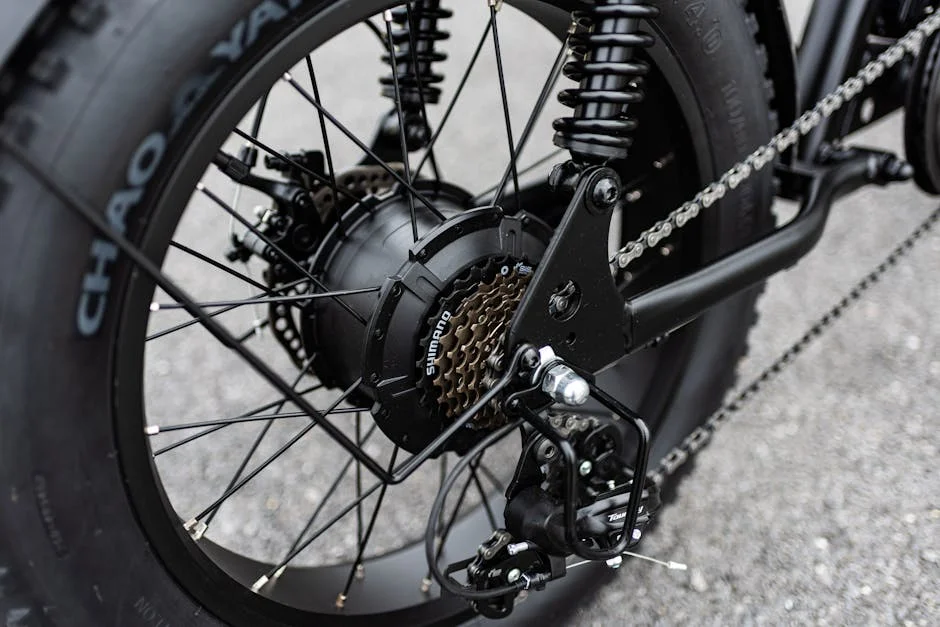
48 Volt eBike Battery Charger: The Buyer's Guide

Affiliate disclosure: Some links on this page are affiliate links. If you buy through them we earn a small commission at no extra cost to you. Recommendations are research-driven; we don't claim personal use of every product reviewed. Product prices and availability are accurate as of the date published and are subject to change. Always check Amazon for current pricing before purchasing. Learn more.
Quick Picks
Unbranded 48V 10A LiFePO4 Battery Charger, 58.4V Lithium Battery Charger, Fast Charging, Over-Current and Over-Voltage Protection for 48V Lithium Iron Phosphate Batteries
48V 10A capacity supports fast charging for LiFePO4 batteries
Buy on AmazonUnbranded 72V Ebike Battery 20Ah Samsungcell Rechargeable Lithium Batteries with 4A Charger Triangle Electric Bike Battery Built-in 80A BMS for 2000-5000W Motor (72V 20Ah)
72V capacity provides extended range for electric bike use
Buy on AmazonUnbranded 48V Lithium Battery Charger – UL Certified 54.6V 2A Fast Charger for Electric Bike, with Auto Shutoff, Intelligent Temperature Control & Fire-Resistant Case
UL certified for safety and regulatory compliance
Buy on Amazon| Product | Price Range | Top Strength | Key Weakness | Buy |
|---|---|---|---|---|
| Unbranded 48V 10A LiFePO4 Battery Charger, 58.4V Lithium Battery Charger, Fast Charging, Over-Current and Over-Voltage Protection for 48V Lithium Iron Phosphate Batteries best overall | $$ | 48V 10A capacity supports fast charging for LiFePO4 batteries | Unbranded products may lack manufacturer support or warranty coverage | Buy on Amazon |
| Unbranded 72V Ebike Battery 20Ah Samsungcell Rechargeable Lithium Batteries with 4A Charger Triangle Electric Bike Battery Built-in 80A BMS for 2000-5000W Motor (72V 20Ah) also consider | $$ | 72V capacity provides extended range for electric bike use | Unbranded product may lack manufacturer support or warranty clarity | Buy on Amazon |
| Unbranded 48V Lithium Battery Charger – UL Certified 54.6V 2A Fast Charger for Electric Bike, with Auto Shutoff, Intelligent Temperature Control & Fire-Resistant Case also consider | $$ | UL certified for safety and regulatory compliance | Unbranded products may lack established warranty or support | Buy on Amazon |
Choosing a 48 volt ebike battery charger sounds straightforward until you realize how much variation exists in connector types, charge rates, and safety certifications across the category. The wrong charger can undercharge a pack, trip protection circuits repeatedly, or in a worst-case scenario, shorten your battery’s usable life significantly. The Batteries & Charging hub covers the full ecosystem, but this guide focuses specifically on 48V charging options for riders who want reliable, safe replenishment without a deep dive into electrical engineering.
The split between LiFePO4 chemistry and standard lithium-ion matters more than most charger listings acknowledge. Charge voltage, termination behavior, and thermal characteristics differ enough that using the wrong charger type is a genuine concern, not a footnote.
What to Look For in a 48V Ebike Battery Charger
Chemistry Match: LiFePO4 vs. Standard Lithium-Ion
The most important variable in charger selection is chemistry compatibility, and it’s the one buyers most commonly overlook. A standard 48V lithium-ion pack (typically 13S configuration) reaches full charge at 54.6V. A 48V LiFePO4 pack (16S configuration) charges to 58.4V. Using a 54.6V charger on a LiFePO4 battery will leave it chronically undercharged. Using a 58.4V charger on a standard lithium-ion pack is a safety risk.
Check your battery’s label or documentation for two numbers: the nominal voltage and the full-charge voltage. The charger’s output voltage must match the full-charge figure exactly. If you’re not sure which chemistry your pack uses, the full-charge voltage printed on the battery casing will tell you, 54.6V means standard lithium-ion, 58.4V means LiFePO4.
Charge Rate and Amperage
Charge rate is expressed in amps. A 2A charger on a 20Ah battery takes roughly ten hours to reach full capacity. A 5A charger cuts that to around four hours. A 10A charger gets there in two. The math is simple, but the trade-off isn’t. Higher charge rates generate more heat, and heat is the primary degradation mechanism in lithium chemistry.
For riders who charge overnight, a 2A or 3A charger is usually the better long-term choice, slower charging is gentler on cell chemistry and extends cycle life. For riders who need the bike ready mid-afternoon after a morning ride, a 5A or 10A option makes practical sense. The right answer depends on your charging window, not on which spec number looks better on a listing.
Safety Certifications and Protection Circuits
UL certification is meaningful on chargers in a way it often isn’t on accessories. A UL-listed charger has been third-party tested for electrical safety, thermal protection, and fault behavior. That matters when the charger is plugged into a wall outlet in a garage or living space for eight hours overnight.
Beyond certification, look for protection circuits covering at least three failure modes: over-voltage (stops charging if output voltage climbs above the target), over-current (cuts power if amperage spikes unexpectedly), and short-circuit protection. A charger that lists all three explicitly is stating that it handles the most common failure scenarios. One that lists none of them is not automatically unsafe, but the absence of disclosed protection specs is worth noting.
Connector Type
Charger compatibility extends to the physical connector, not just the voltage. The most common connectors on 48V e-bike packs are XLR (3-pin or 4-pin), DC barrel connectors of various diameters, and XT60. Most charger listings will specify the connector type, and it must match your battery’s charge port.
If the listing is ambiguous, check the battery documentation or contact the manufacturer before ordering. A step-down converter or adapter is not a reliable workaround for a voltage mismatch. The full range of charging and battery options worth knowing about is at the e-bike batteries and charging guide.
Top Picks
48V 10A LiFePO4 Battery Charger, 58.4V Output, Fast Charging
The 48V 10A LiFePO4 Battery Charger is built for one specific job: fast, complete charging of LiFePO4 packs. The 58.4V output voltage is the correct full-charge target for a 16S LiFePO4 configuration, and the 10A charge rate means a 20Ah pack reaches full capacity in roughly two hours.
Owner reports consistently note that the charger terminates cleanly at full charge without prolonged trickle behavior that generates unnecessary heat. Built-in over-current and over-voltage protection addresses the two most common failure modes. For LiFePO4 users with large-capacity packs who need reliable fast turnaround, the field consensus is that this performs as described.
The caveat here is the same one that applies to any unbranded charger: verify your battery’s chemistry and full-charge voltage before ordering. This charger will not work correctly with standard lithium-ion packs. It is specifically a LiFePO4 tool. Buyers who have confirmed their battery specification report strong satisfaction with the charge speed and reliability.
Check current price on Amazon.
72V Ebike Battery 20Ah with 4A Charger
This listing includes the 72V Ebike Battery 20Ah Samsungcell paired with a 4A charger, which makes it relevant to buyers who are sourcing a complete battery-and-charger system rather than a replacement charger alone. The Samsung cell construction is a meaningful spec, Samsung SDI cells have a well-documented track record in the e-bike community for consistency and cycle stability.
The built-in 80A BMS handles cell balancing and protection for motor loads up to 5000W. The included 4A charger is matched to the pack’s capacity and chemistry, which eliminates the compatibility guessing that comes with sourcing charger and battery separately. Verified buyer reports note the BMS behavior is conservative in a good way, protection trips are infrequent under normal use and appear to engage appropriately under fault conditions.
One important note: this is a 72V system, not a 48V system. If your motor and controller are rated for 48V, this pack is not compatible. For 2000W, 5000W builds where 72V is the correct voltage, the Samsung cell spec and included charger make this a coherent package.
Check current price on Amazon.
48V Lithium Battery Charger, UL Certified, 54.6V 2A
The 48V Lithium Battery Charger, UL Certified is the option for buyers whose priority is verified electrical safety and overnight charging without supervision. UL certification means a third party has tested this charger against defined electrical safety standards, not a guarantee of perfect performance, but a meaningful baseline that most unbranded chargers don’t meet.
The 54.6V output voltage confirms this is designed for standard 48V lithium-ion packs (13S configuration), not LiFePO4. The 2A charge rate is conservative by design. That rate is gentle on cell chemistry, runs cooler than higher-amperage alternatives, and is appropriate for overnight charging where speed is not the constraint. Intelligent temperature control and a fire-resistant case address the scenarios that make leaving a charger unattended overnight feel less like a risk calculation.
Buyers who run standard lithium-ion 48V packs on commuter or recreational builds and charge at home regularly will find this charger well-matched to their actual use pattern. The auto-shutoff behavior is noted consistently in owner reviews as clean, the charger stops at full charge without requiring manual intervention or producing extended idle heat.
Check current price on Amazon.
Buying Guide
Matching Charger Voltage to Your Pack
The number printed on your battery as “48V nominal” is not the number your charger needs to output. Chargers terminate at the pack’s full-charge voltage, 54.6V for standard lithium-ion, 58.4V for LiFePO4. These are not interchangeable. Ordering a charger based on the nominal voltage alone without checking the full-charge figure is the most common compatibility mistake in this category.
Before purchasing any charger, pull up your battery’s documentation or read the label on the pack itself. If the label shows a maximum charge voltage, that’s the number your charger output must match exactly.
Charge Rate vs. Battery Longevity
Higher amperage means faster charging and more heat generated during the charge cycle. Heat accelerates lithium cell degradation over hundreds of cycles. A 10A charger that fills your pack in two hours is not objectively better than a 2A charger that takes ten, it depends on whether charge speed is a genuine operational need.
For most recreational riders who charge overnight, a 2A or 3A charger is the better long-term choice. For riders with multiple daily rides or time-constrained charging windows, a 5A or 10A option is a reasonable trade-off. Be honest about your actual charging pattern rather than defaulting to the highest available amperage.
Safety Certifications Worth Checking
UL listing on a charger is a third-party verification of electrical safety behavior, how the charger handles faults, thermal conditions, and input voltage variation. It’s not universal on Amazon listings, but when it’s present, it carries real meaning for buyers who charge indoors or overnight.
Beyond UL, check whether the listing explicitly names over-voltage, over-current, and short-circuit protection. A charger that lists all three has disclosed its fault-handling behavior. Reviewing the full context of Batteries & Charging options will show which protection specs appear consistently across reputable chargers in this voltage class.
Understanding BMS Interaction
Your battery’s Battery Management System and your charger don’t operate in isolation, they interact on every charge cycle. A charger that terminates cleanly at the correct voltage allows the BMS to handle cell balancing without interference. A charger with erratic termination behavior can trigger BMS protection circuits repeatedly, which shortens pack life and can produce charging failures that look like battery problems but are actually charger problems.
If your battery repeatedly stops accepting charge before reaching full capacity, the BMS tripping on charger behavior is worth investigating before assuming the cells are degraded.
Connector Verification Before You Order
Voltage and chemistry matching get most of the attention, but a charger that arrives with the wrong connector is immediately non-functional. The most common charge port types on 48V packs are XLR (3-pin or 4-pin), DC barrel in several diameter variants, and XT60. Most product listings specify the connector, read that detail carefully.
If the listing is ambiguous, contact the seller or check the battery manufacturer’s documentation. Adapters for voltage-compatible connectors exist, but they introduce an additional failure point in a system where clean electrical contact is important.
Frequently Asked Questions
What is the difference between a 54.6V and a 58.4V charger for a 48V ebike?
Both are 48V chargers, but they’re designed for different battery chemistries. Standard lithium-ion 48V packs use 13S cell configurations and reach full charge at 54.6V. LiFePO4 48V packs use 16S configurations and charge to 58.4V. Using a 54.6V charger on a LiFePO4 pack leaves it chronically undercharged.
How do I know if my ebike battery is LiFePO4 or standard lithium-ion?
Check your battery’s label or documentation for a maximum charge voltage. If it shows 54.6V, the pack is standard lithium-ion (NMC or similar). If it shows 58.4V, it’s LiFePO4. You can also look at the cell count: 13S means standard lithium-ion, 16S means LiFePO4.
Is a faster charger bad for my ebike battery?
Higher amperage charge rates generate more heat, and heat is the primary factor in long-term lithium cell degradation. A 10A charger isn’t dangerous under normal use, but it will accumulate more thermal stress over hundreds of cycles than a 2A charger will. For riders who charge overnight with no time pressure, slower charging is the better long-term choice. For riders who genuinely need a fast turnaround between rides, a 5A or 10A charger is a reasonable trade-off.
Should I get a UL-certified charger, and does it matter for ebike use?
UL certification means the charger has been tested by a third-party lab for electrical safety compliance, fault behavior, thermal limits, and input voltage variation. It matters most for buyers who charge indoors or leave the charger unattended overnight. The 48V Lithium Battery Charger, UL Certified is one of the few explicitly UL-listed options in this category. Not every capable charger carries UL listing, but for indoor overnight charging, the verification is worth prioritizing.
Can I use a 72V charger or battery system on a 48V ebike?
No. Voltage systems are not interchangeable at the motor, controller, or charger level. A 72V pack will overvolt and damage a 48V controller. A 72V charger will deliver voltage beyond the safe charge limit of a 48V pack.

Where to Buy
Unbranded 48V 10A LiFePO4 Battery Charger, 58.4V Lithium Battery Charger, Fast Charging, Over-Current and Over-Voltage Protection for 48V Lithium Iron Phosphate BatteriesSee 48V 10A LiFePO4 Battery Charger, 58.4… on Amazon